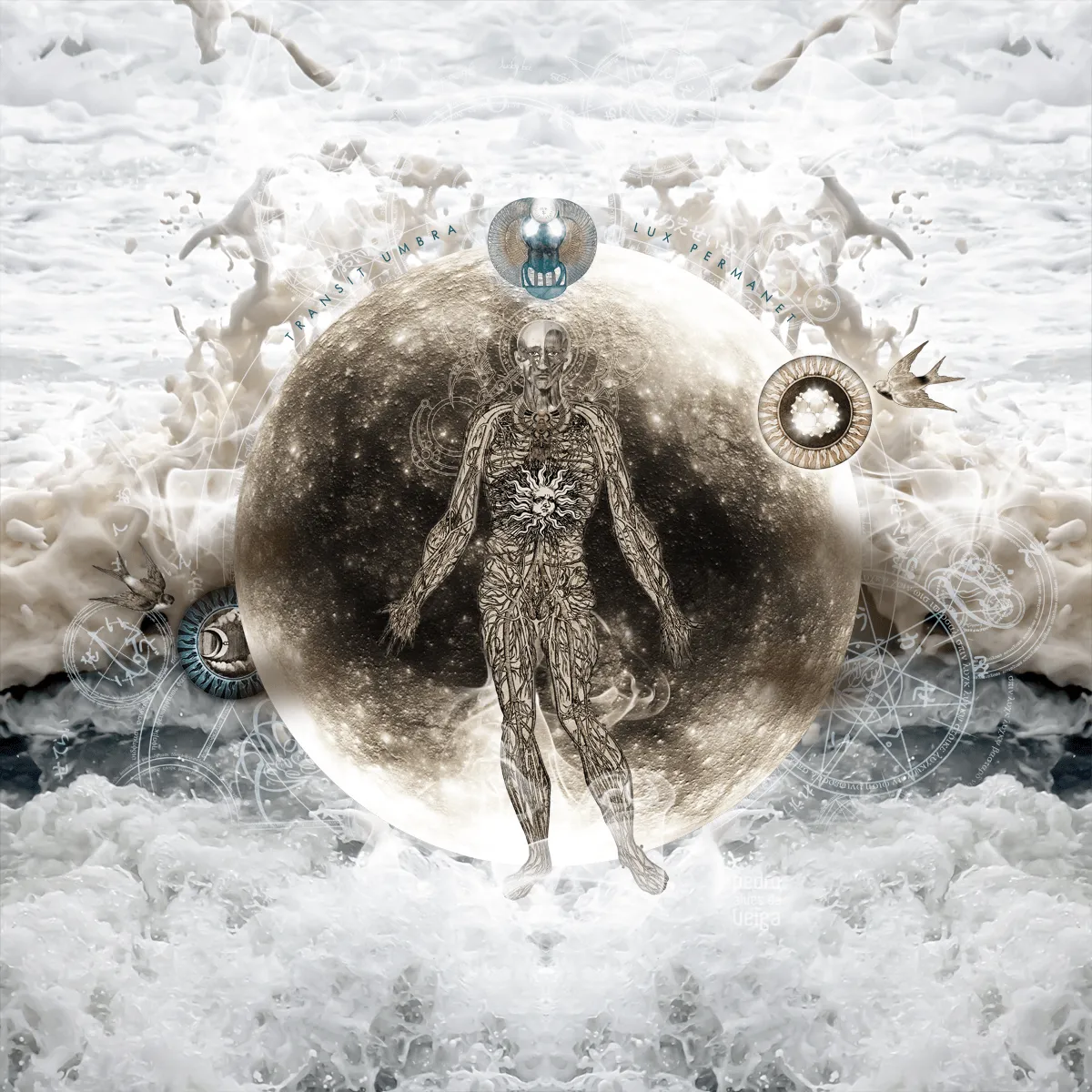
A piece in the Principium series.
Shadow passes, light remains.
A sombra passa, a luz permanece.
This is a typical sundial inscription, alluding to the passage of time and the cycles of darkness and light. In the background we see a representation of the moon, and in the solar plexus of the human figure a sun, reinforcing this concept of the interconnection of light/shadow/darkness, in which one does not exist without the other.
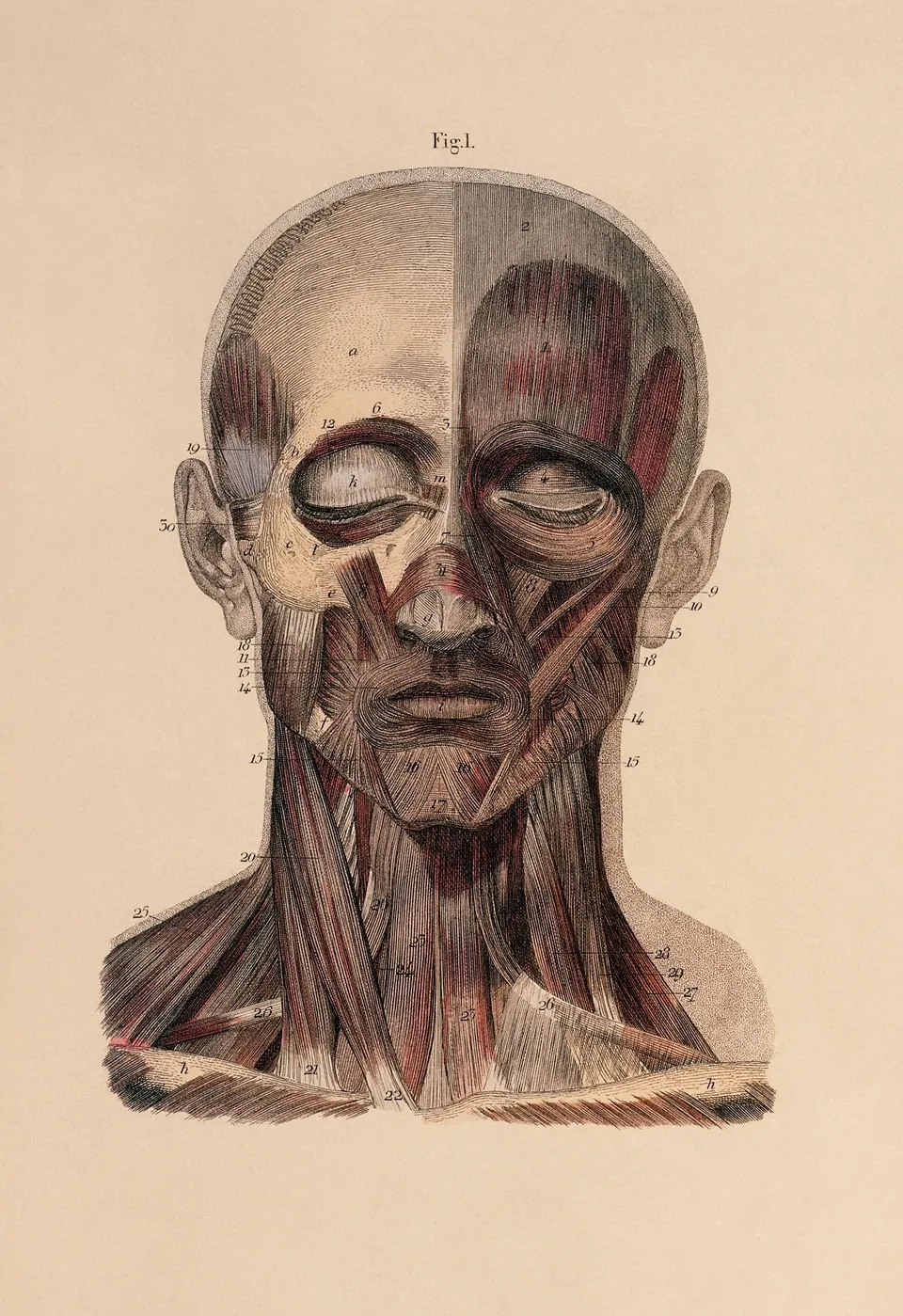
Illustration of the muscles of the head and face from the "Handbuch der Anatomie des Menschen", published in Leipzig, Germany, in 1841.
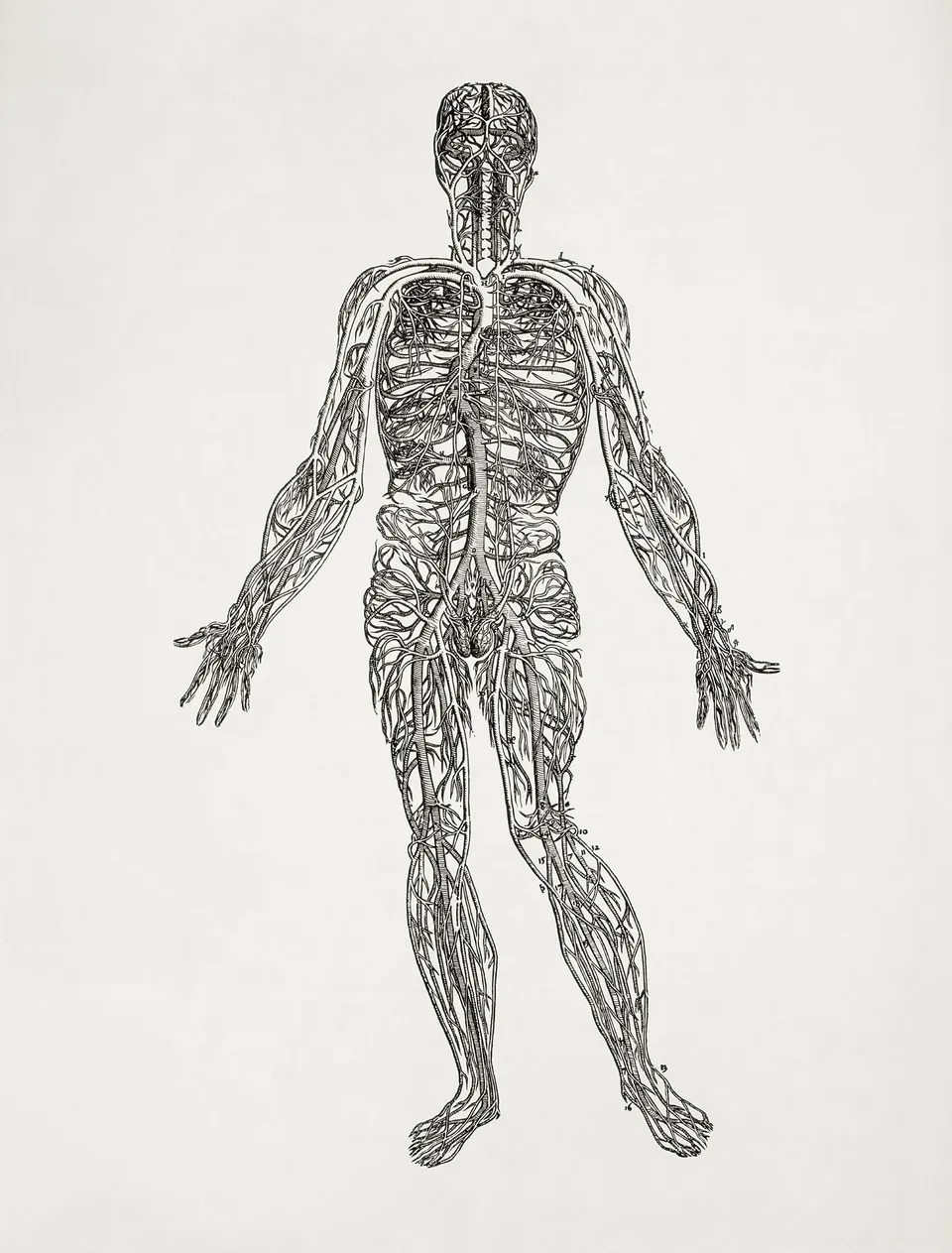
Illustration of the circulatory system by Andreas Vesalius, 1543.
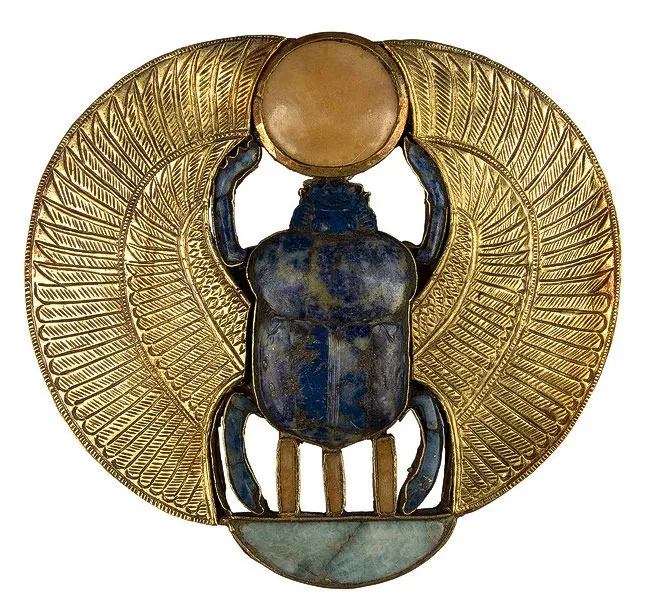
The Egyptian scarab crowning the figure is a cyclical solar symbol and a symbol of resurrection. The scarab represents the sun reborn from itself, like a god who always returns. In Egyptian art, scarabs are shown carrying the sun between their legs – as real dung beetles roll balls into their burrows – and, as a sun god reborn from its own decomposition, it returns through the shadows of the night, thus embodying the cycle of days and nights. In ancient Egypt it was also used as a lucky amulet, holding the secret of the eternal return to life.