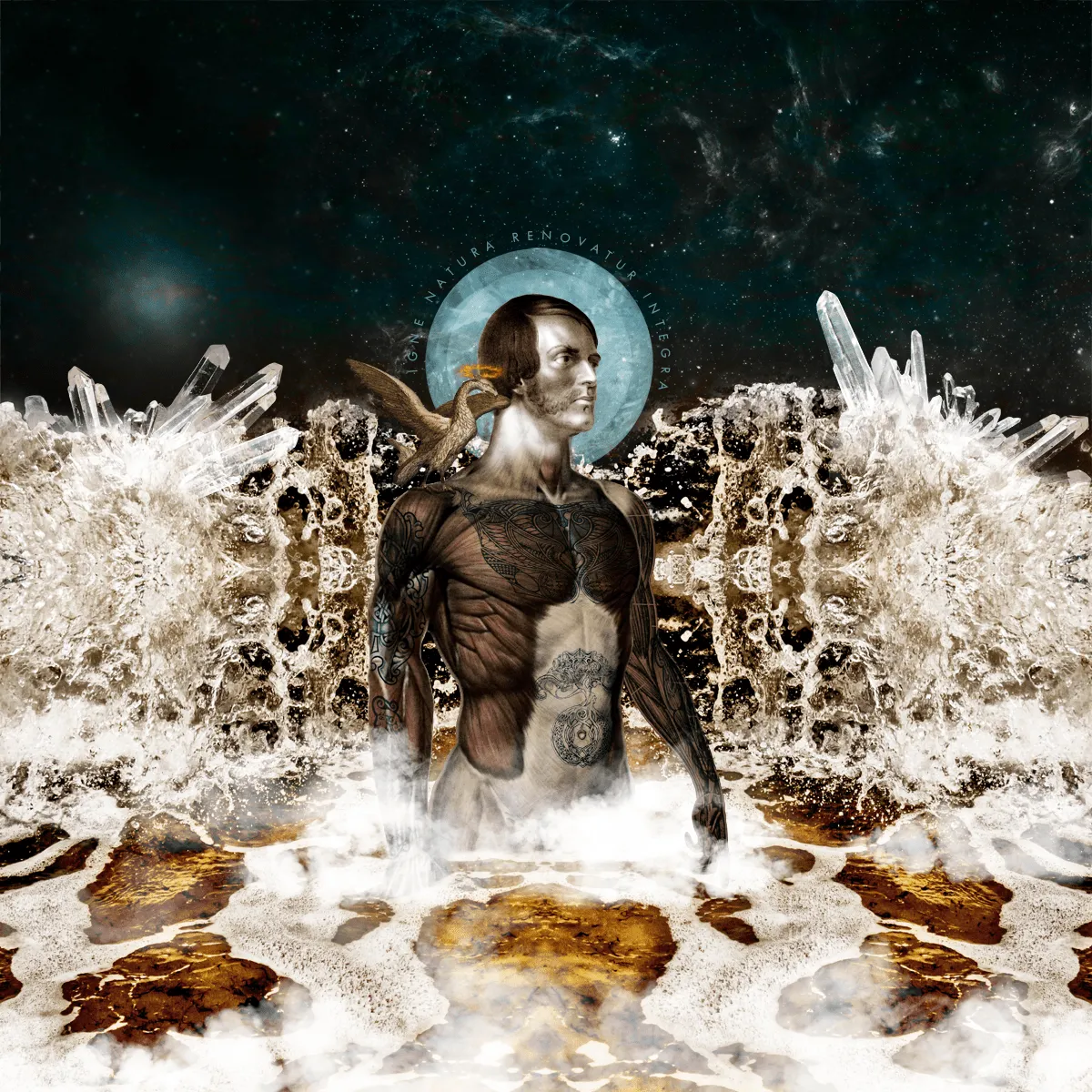
A piece in the Principium series.
Through fire, nature is reborn whole.
Pelo fogo, a natureza renasce íntegra.
Or pure matter is restored by the spirit. This medieval Rosicrucian motto represents the work of the inner fire of the spirit: when it operates freely, without the limits of the veils that surround it, it reduces those veils to unity with itself, so that pure, original and complete nature is restored to its primordial essence. Thus, when a person lives entirely in the light of the inner divine fire or spirit, all the veils of their consciousness coalesce with the inner fire, the original spirit is restored, and union with the divine is achieved.
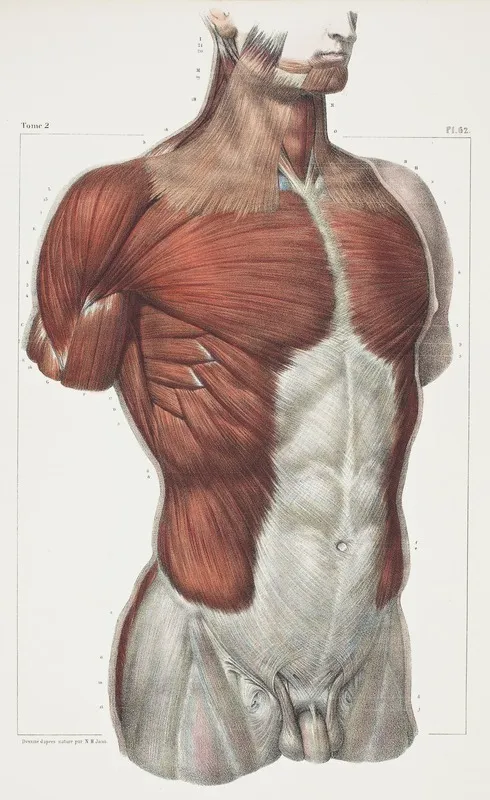
The illustration of the torso comes from Jean-Marc Bourgery's "Traité complet de l'anatomie de l'homme comprenant la médecine opératoire", and was produced by Nicolas Henri Jacob in 1831.
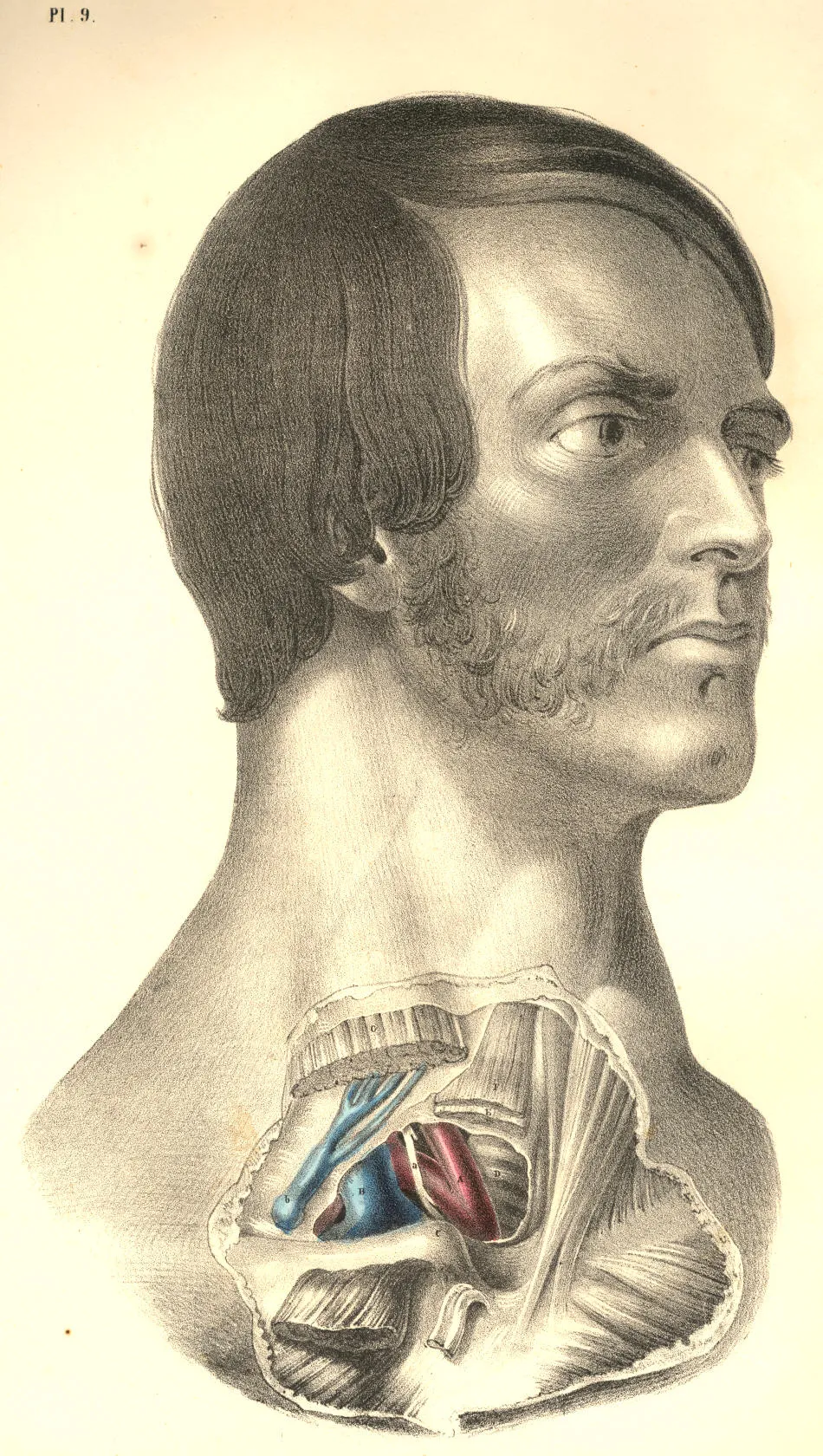
The illustration of the head is by Joseph Maclise, from his book "Surgical Anatomy" (1859).
The illustration of the phoenix is by Friedrich Justin Bertuch, from the children's book "Bilderbuch für Kinder", and dates from 1806.
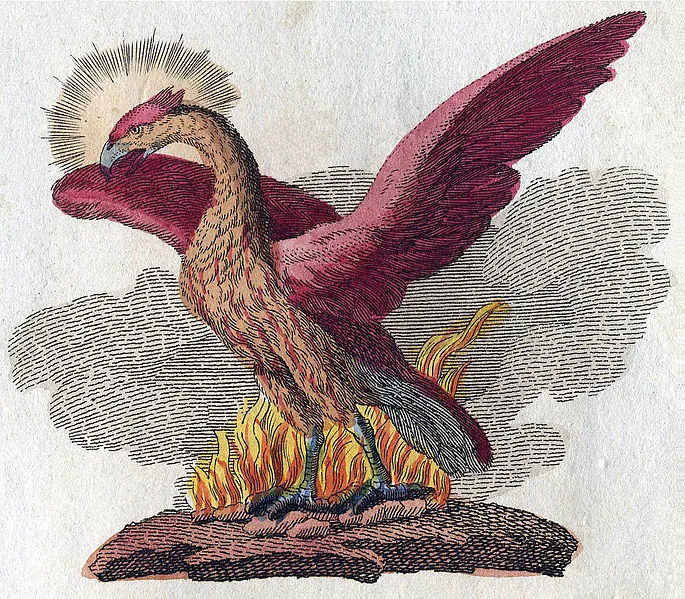
The phoenix (Ancient Greek: ϕοῖνιξ) is a bird of Greek mythology that died by bursting into flames, only to be reborn from its own ashes some time later. Another feature attributed to the phoenix was its strength, which allowed it to carry very heavy loads in flight – in some legends even elephants – and it could also turn into a bird of fire.
It was said to have bright golden and purplish-red feathers and to be as large as an eagle or larger. According to some Greek writers, the phoenix lived exactly five hundred years; others believed its life cycle lasted 97,200 years. The phoenix's long life and dramatic rebirth from its own ashes made it a symbol of immortality and spiritual rebirth. Its tears were said to heal any kind of illness or wound.
The Greeks seem to have drawn on the Bennu of Egyptian mythology, depicted as a greyish heron-like bird, now extinct, that lived in Egypt. According to Egyptian mythology, at the end of its life cycle the Bennu built a pyre of cinnamon, sage and myrrh branches and died in its flames. From the ashes a new bird would then rise, which piously placed the remains of its parent in an egg of myrrh and flew with it to the Egyptian city of Heliopolis, where it laid them on the Altar of the Sun.
Scholars now believe the legend arose in the East – an obvious symbol of reincarnation – and was adapted by the sun priests of Heliopolis as an allegory of the daily death and rebirth of the sun. Like all the great Greek myths, it resonates with something deep within us. In Christian art, the reborn phoenix became a popular symbol of the resurrection of Christ.
The Persian Sufi poet Farid al-Din Attar, in his book The Conference of the Birds (1177), also describes the phoenix:
Quotation in Portuguese translation.
"Na Índia vive um pássaro que é único: a encantadora fénix tem um bico extraordinariamente longo e muito duro, perfurado com uma centena de orifícios, como uma flauta. Não tem fêmea, vive isolada e o seu reinado é absoluto. Cada abertura em seu bico produz um som diferente, e cada um desses sons revela um segredo particular, subtil e profundo. Quando ela faz ouvir essas notas plangentes, os pássaros e os peixes agitam-se, as bestas mais ferozes entram em êxtase; depois todos se silenciam. Foi desse canto que um sábio aprendeu a ciência da música. A fénix vive cerca de mil anos e conhece de antemão a hora de sua morte.
Quando ela sente aproximar-se o momento de retirar o seu coração do mundo, e todos os indícios lhe confirmam que deve partir, constrói uma pira reunindo ao redor de si lenha e folhas de palmeira. No meio dessas folhas entoa tristes melodias, e cada nota melancólica que emite é uma evidência de sua alma imaculada. Enquanto canta, a amarga dor da morte penetra no seu íntimo e ela treme como uma folha. Todos os pássaros e animais são atraídos pelo seu canto, que soa agora como as trombetas do Último Dia; todos se aproximam para assistir ao espetáculo de sua morte, e, pelo seu exemplo, cada um deles ganha determinação para deixar o mundo para trás e resigna-se a morrer. De facto, nesse dia um grande número de animais morre com o coração ensanguentado diante da fénix, por causa da tristeza de que a vêem presa. É um dia extraordinário: alguns soluçam em simpatia, outros perdem os sentidos, outros ainda morrem ao ouvir seu lamento apaixonado. Quando lhe resta apenas um sopro de vida, a fénix bate suas asas e agita suas plumas, e deste movimento produz-se um fogo que transforma seu estado. Este fogo espalha-se rapidamente para folhagens e madeira, que ardem agradavelmente. Em breve, madeira e pássaro tornam-se brasas vivas, e então cinzas. Porém, quando a pira foi consumida e a última centelha se extingue, uma pequena fénix desperta do leito de cinzas.
Aconteceu alguma vez a alguém deste mundo renascer depois da morte? Mesmo que te fosse concedida uma vida tão longa quanto a da fénix, terias de morrer quando a medida da tua vida fosse preenchida. A fénix permaneceu por mil anos completamente só, no lamento e na dor, sem companheira nem progenitora. Não contraiu laços com ninguém neste mundo, nenhuma criança alegrou a sua idade e, no final da sua vida, quando teve de deixar de existir, lançou as suas cinzas ao vento, a fim de que saibas que ninguém pode escapar à morte, não importa que astúcia empregue. Em todo o mundo não há ninguém que não morra. Sabe, pelo milagre da fénix, que ninguém tem abrigo contra a morte. Ainda que a morte seja dura e tirânica, é preciso conviver com ela, e embora muitas provações caiam sobre nós, a morte permanece a mais dura prova que o Caminho nos exigirá".