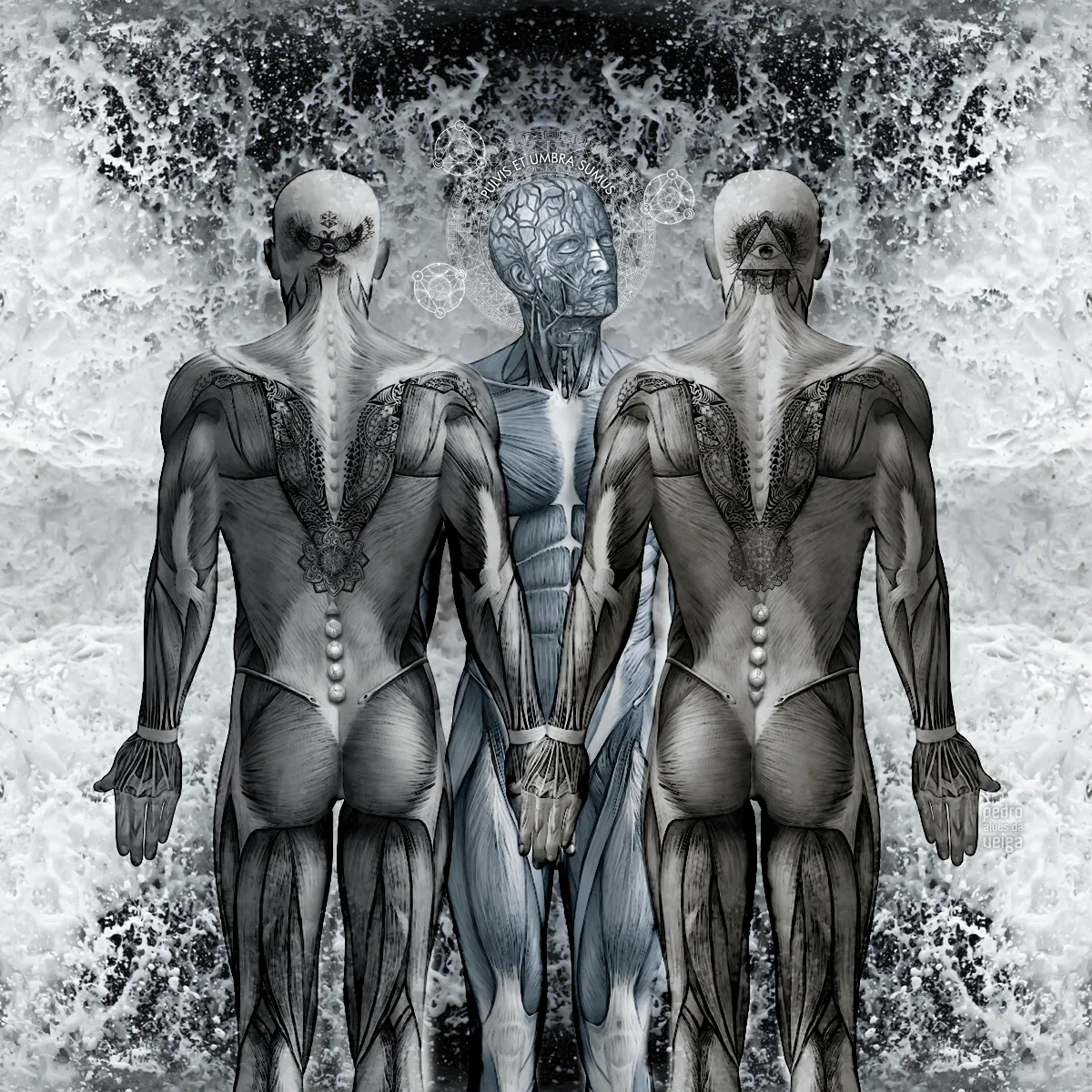
A piece in the Principium series.
We are dust and shadow.
Somos pó e sombra.
A phrase from the work of Quintus Horatius Flaccus (65 BC – 8 BC), a Roman lyric and satirical poet and philosopher, known as one of the greatest poets of ancient Rome.
The phrase refers to the transient nature of the body when reduced to its simplest materiality, and is interpreted in this canvas as the shadow that others produce in us, which defines us but so often also limits us. Our social existence brings new revelations, but also new limitations, and the secret lies in the balance between them.
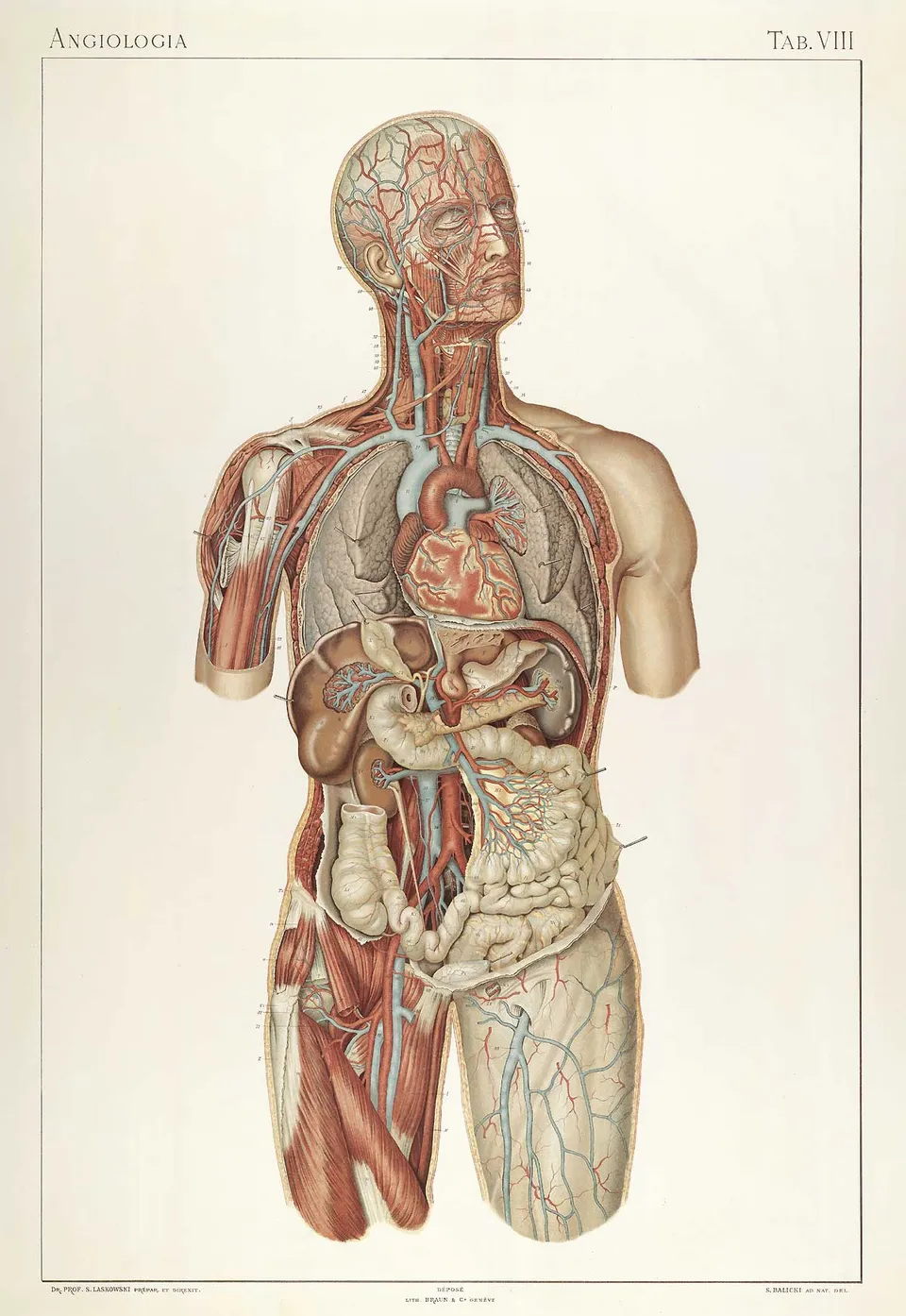
The "Angiologia" illustration is taken from Anatomie normale du corps humain: atlas iconographique de XVI planches / par le docteur S. Laskowski; dessinées d'après les préparations de l'auteur par S. Balicki (1894).
On the napes of the two side figures are the symbols of the spiritual dimension of human nature: the double-headed eagle and the Eye of Providence, or All-Seeing Eye:
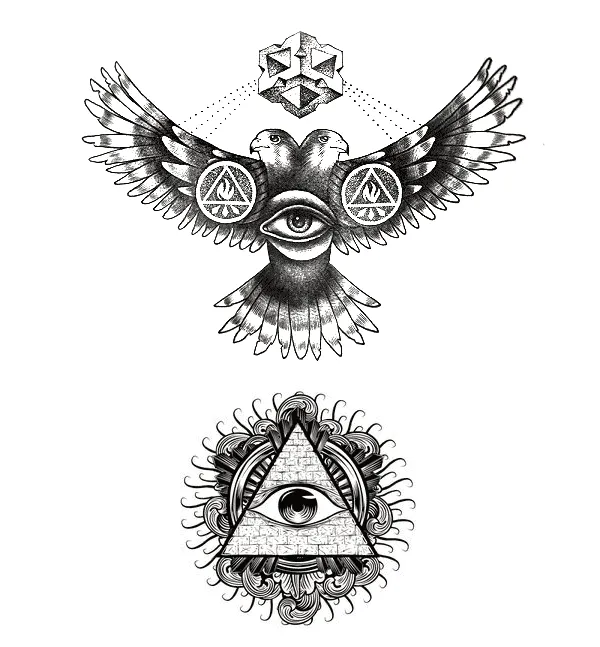
The double-headed eagle is a symbol found in the iconography and heraldry of several Indo-European and Mesoamerican cultures. The European version derives from the Hittite double-headed eagle and reached the Western Middle Ages through the Byzantine Empire. The eagle's heads, looking in opposite directions, represented power exercised over East and West, political and religious, as in intercontinental empires such as Byzantium or Russia.
The Eye of Providence is a symbol consisting of an eye surrounded by rays of light or glory, often within or above a triangle or pyramid. It is usually interpreted as the eye of God (in his manifestation as the Trinity, in Christianity) watching over humanity. The All-Seeing Eye also appears in Masonic iconography, as a symbol that everything is seen by the Great Architect of the Universe.