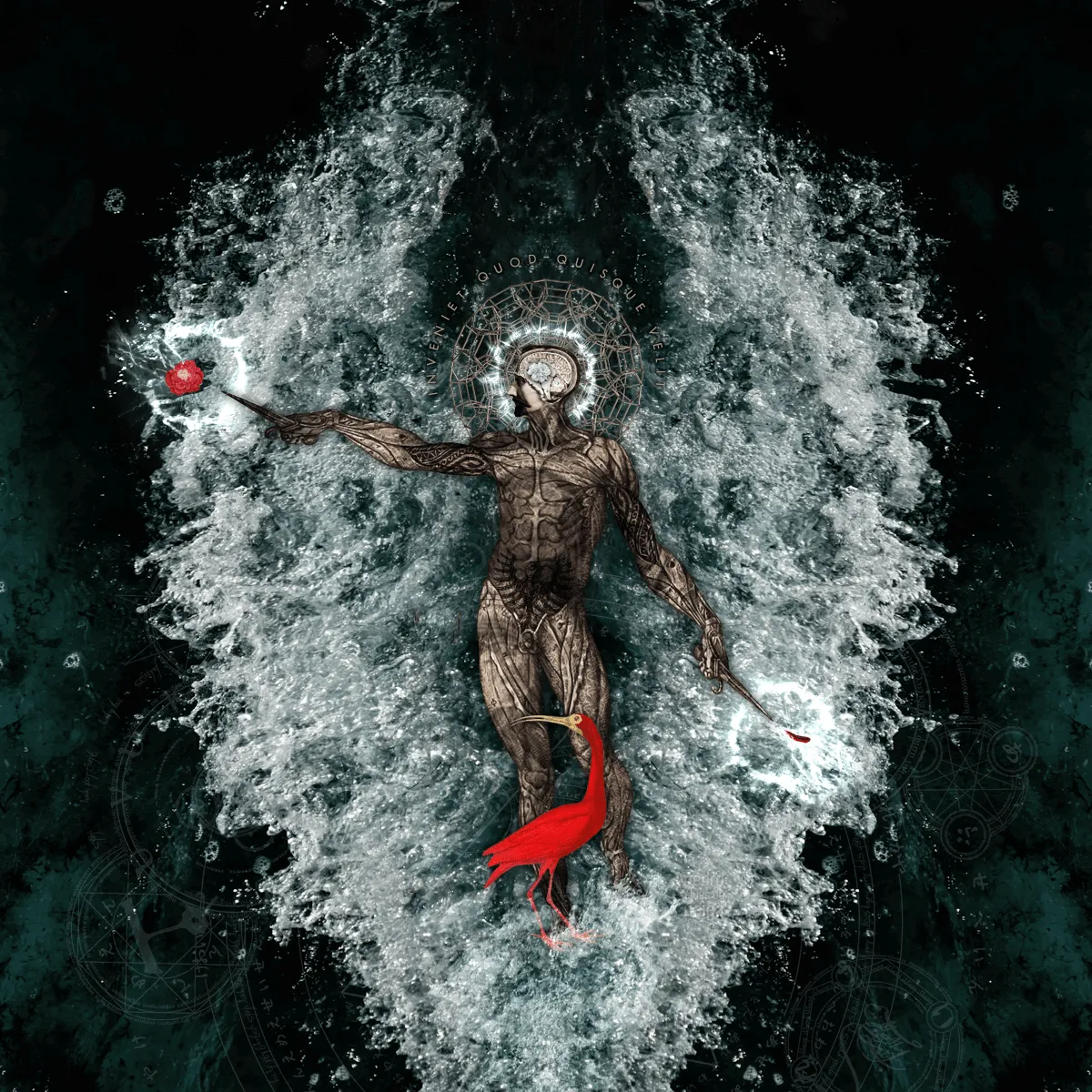
A piece in the Principium series.
Each shall find what he desires.
Cada um encontra o que deseja.
A phrase attributed to Aurelius Clemens Prudentius, commonly known simply as Prudentius (348 – c. 410), a Christian Roman poet born in the Roman province of Hispania Tarraconensis. He travelled to Rome at the call of Emperor Theodosius I and became an imperial official. Towards the end of his life (around 392) he withdrew from public life and became an ascetic, fasting during the day and abstaining from food of animal origin. From then on he wrote his poems, and he is considered the greatest Christian poet of Late Antiquity.
The base illustration is the "Anatomia del corpo humano" by Juan Valverde de Amusco, in which a man holds his own skin in one hand and a dissecting knife in the other, in a classical pose.
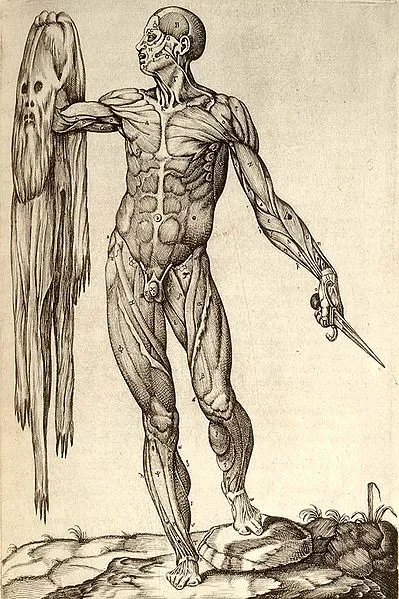
I used several image-processing techniques and chose to "replace" the head of the original illustration with another, as well as to remove the arm holding the skin and recreate it from the other arm.
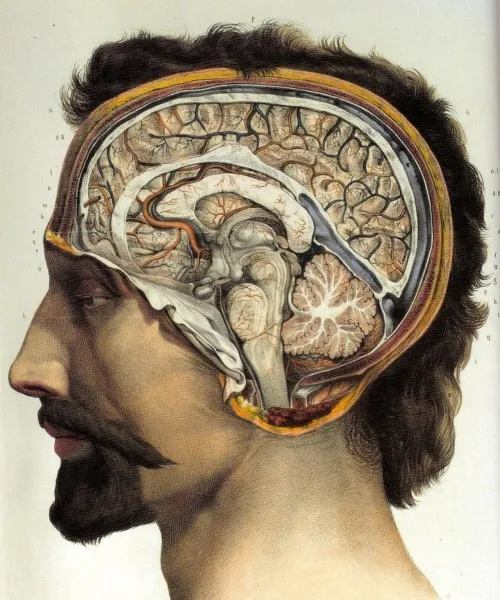
The illustration shows a section of the head, with the brain and cerebellum, and is by Jean-Baptiste Marc Bourgery, from the Traité complet de l'anatomie de l'homme, Paris 1831–1854 (J. M. Bourgery and N. H. Jacob).
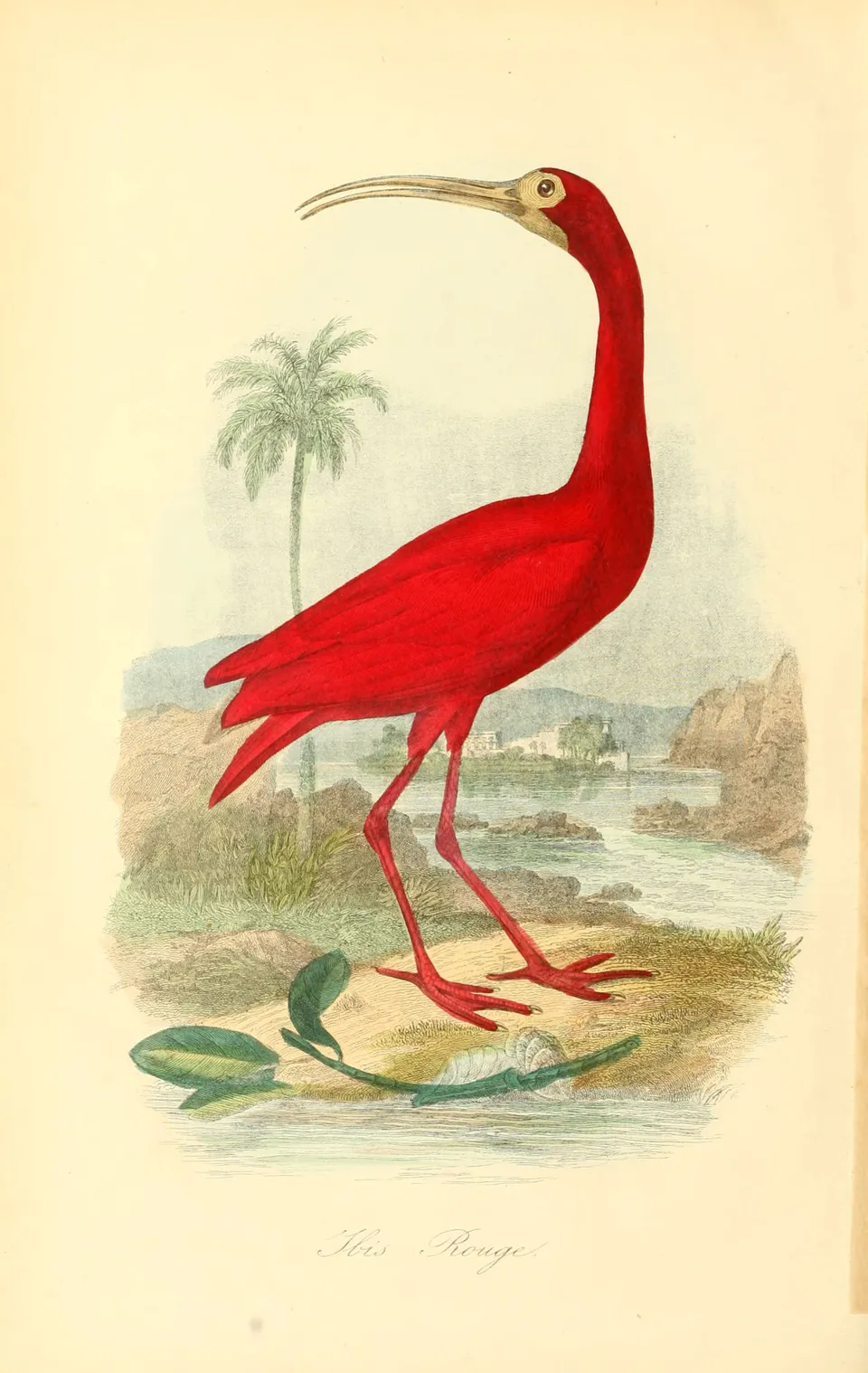
The illustration of the scarlet ibis is attributed to Lord Turnbull, probably from the late 19th century.
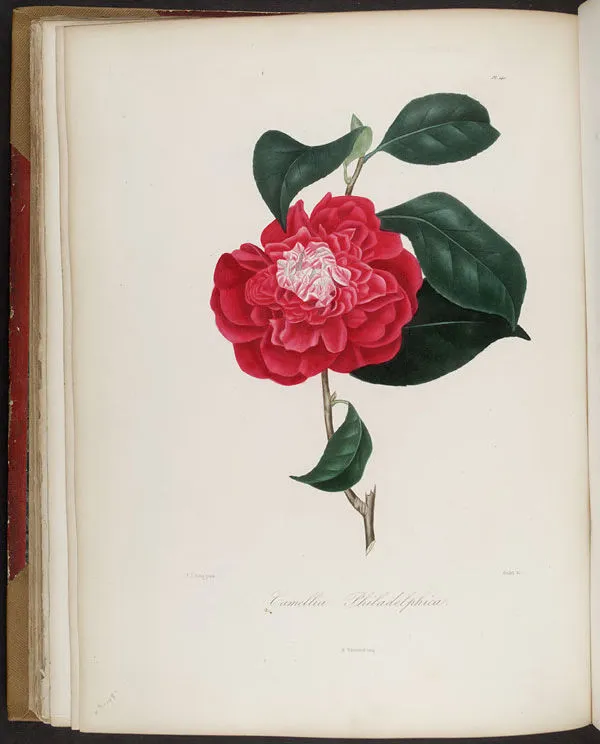
The red camellia is an Eastern symbol of life and nobility (China) and of love and excellence (Japan). The illustration is attributed to the Abbé Laurent Berlèse, around 1839–43.
