Pedro Alves da Veiga
PT EN

G.O.D.

Generative Ominous Dataset

Non-interactive generative installationSilentInfinite duration, never repeating2023
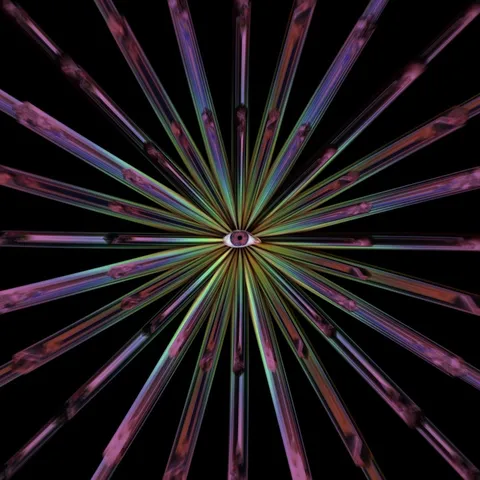
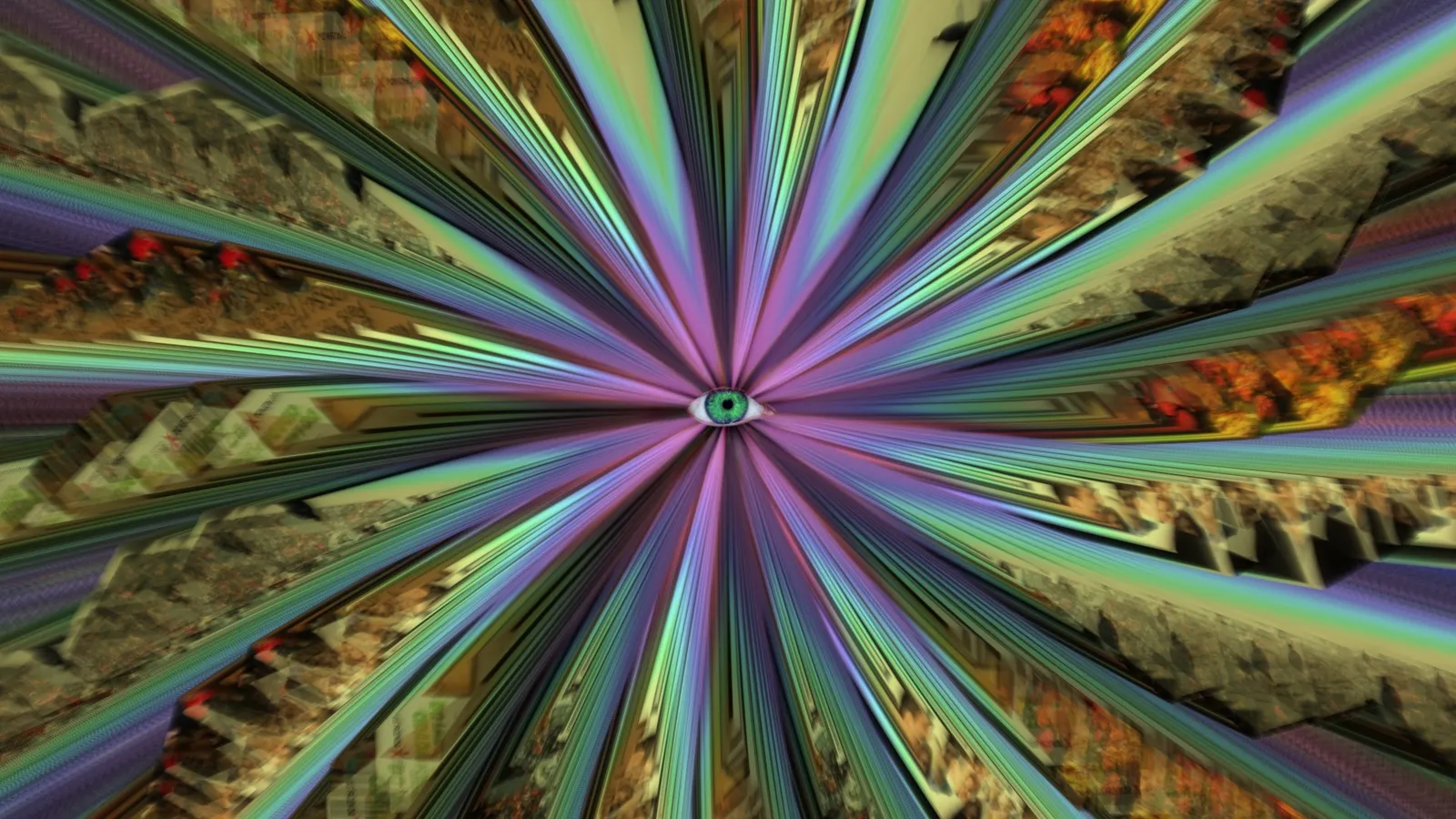
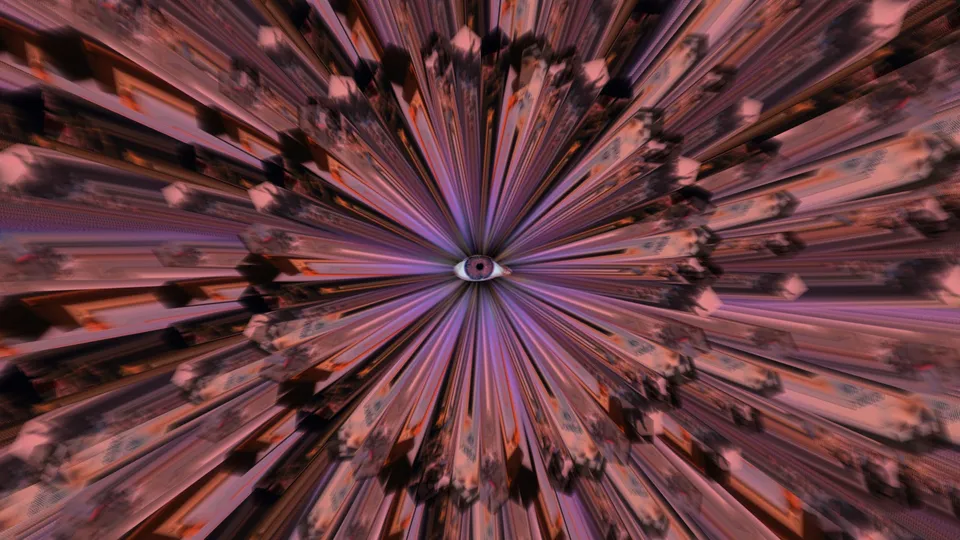
Fotograma de G.O.D.: raios violeta, verdes e ocres convergem para um olho humano no centro da imagem; nas faixas entre os raios veem-se fragmentos alterados de fotografias de multidões e destruição.
Frame 002 0461920 × 1080 px

G.O.D. is a generative non-interactive – yet infinite – cinematic and hypnotic installation, triggered by a call for participation under the general title of "Vision of God".

Artistic depictions of God in the Western Christian tradition are mostly connected to vision and, because figurative depictions essentially refer to corporeal entities, the triadic nature of God – Father, Son and Holy Ghost – has challenged this approach. Hence some artists chose to depict God's hand or God's all-seeing eye.

G.O.D. | Generative Ominous Dataset is the author's convergent interpretation and rendition of a (carefully curated and rather appropriate) "triad" of key concepts.

  1. Data = God

    Recent advances in Generative Adversarial Networks and Natural Language Processing brought to the public eye, with unprecedented popularity, Artificial Intelligence systems capable of generating both text and images from interactive user prompts. However, the vast – and mostly unauthorised – datasets used to train the AIs are the key to their success. Behind the hype, Big Data is feverishly collecting ever-expanding amounts of user information, for consumerist and control purposes alike. Thus, the "All Seeing Eye" appears as a relevant metaphor for "DATA as GOD".

  2. Ominous Dataset

    The dataset used by G.O.D. consists of images retrieved from the Internet in a similar way to modern AI systems: disregarding any potential copyright infringements, in a classic – yet questionable – claim that the end justifies the means. All the images depict situations of violence, war, destruction, conflict, harassment, cruelty, street protests, violent repression and natural disasters. However, unlike the datasets used by AI systems, G.O.D. profoundly altered the source images and rendered them unrecognisable before using them to depict God's (and G.O.D.'s) Radiance and Revelations.

  3. Generative epiphany

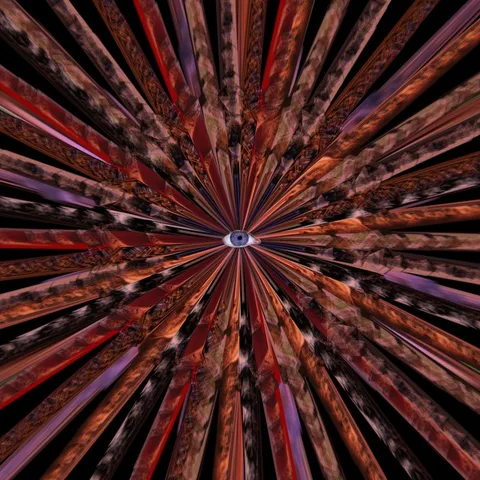
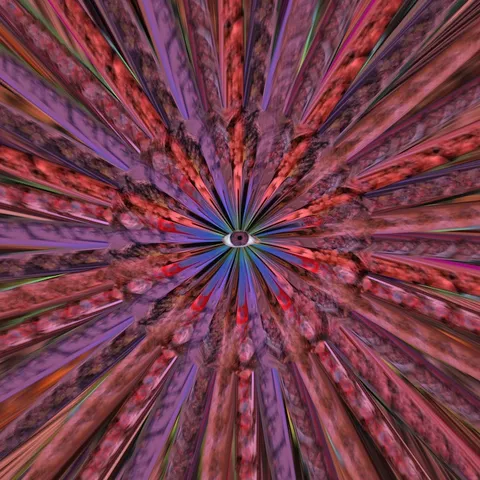
    G.O.D. delivers infinite, radiant bursts of generative enlightenment, without any repetitions, like surges of hypnotic epiphanies, combining symmetry and chaos in the aesthetic revelations. As a generative installation, during run-time G.O.D. delivers an infinite stream of never-repeating patterns; one could define the G.O.D. experience as an infinite succession of epiphanies, almost "an aesthetic rapture", a sensory flood by the divine.

Full development Veiga (2023), Generative Ominous Dataset: Testing the current public perception of generative art · DOI ↗ · Open access ↗
Frames and prints

Numbered by position in the stream
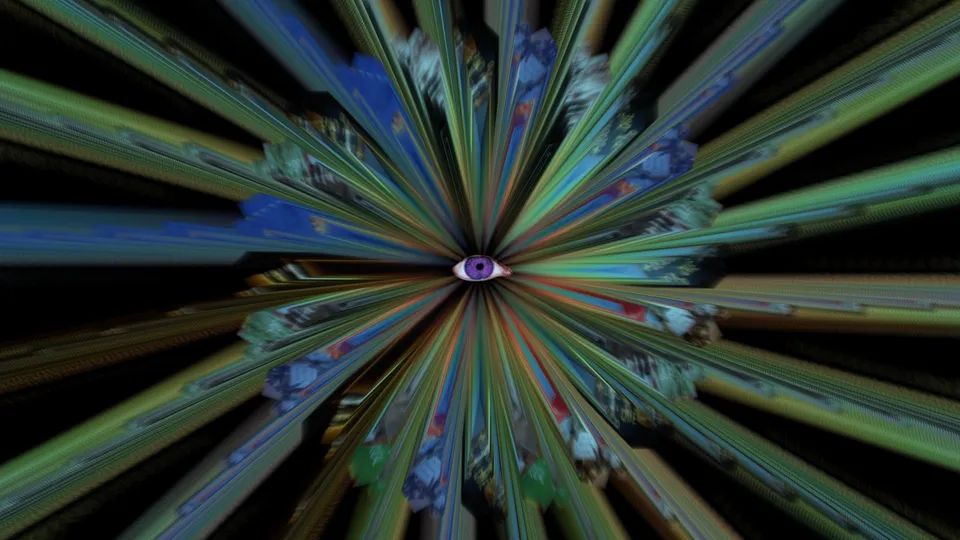
Fotograma de G.O.D.: explosão radial de faixas coloridas em torno de um olho central.
Frame 000 173
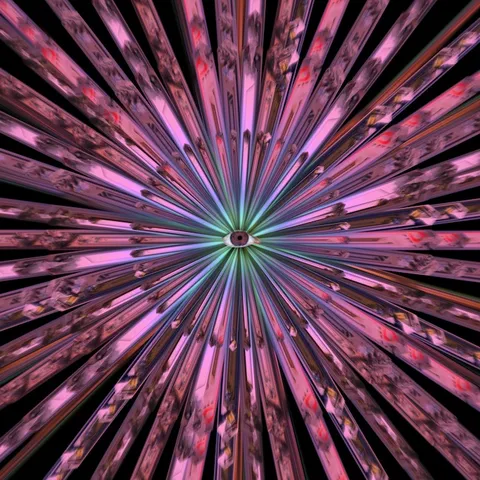
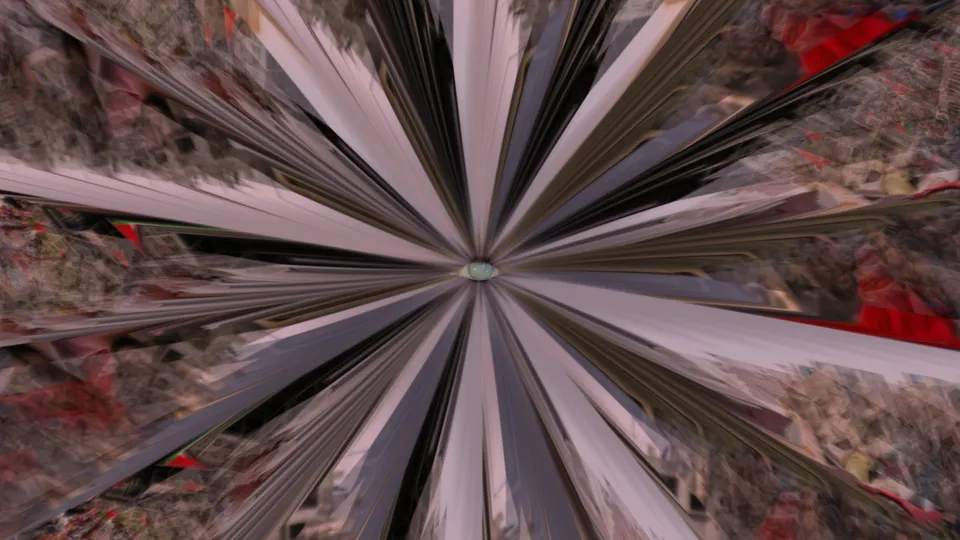
Fotograma de G.O.D.: raios simétricos com fragmentos de imagens alteradas.
Frame 000 688
Impressão quadrada de G.O.D., fotograma 000 357.
N.º 000 357 · 50 × 50 cm
Impressão quadrada de G.O.D., fotograma 000 809.
N.º 000 809 · 50 × 50 cm
Impressão quadrada de G.O.D., fotograma 000 990.
N.º 000 990 · 50 × 50 cm
Impressão quadrada de G.O.D., fotograma 016 742.
N.º 016 742 · 50 × 50 cm

Other relevant information

Source materials
Content
Images of violence, war, destruction, conflict, harassment, cruelty, street protests, violent repression and natural disasters.
Provenance
Retrieved from the Internet, in a similar way to AI systems.
Permission
None. The unauthorised appropriation is deliberate and part of the work's critical proposition.
Treatment
Profoundly altered and rendered unrecognisable before entering the system.
Visual references
  • St. James ChurchThe eye of God on the church ceiling, Louisville, Kentucky, USA
  • Gustave DoréRosa Celeste, illustration for Paradiso, Canto XXXI (1868)
  • Ernst FuchsApocalypse Chapel, Klagenfurt (1990–2000)

"For how can the corporal eyes see something infinite and unlimited?"

By providing an infinite stream of contemplation.

Question from the "Vision of God" call ↗ · the author's answer

Presentations

202325.03 – 23.06
International group show

Vision of God

Bull & Stein Gallery · Porto, Portugal

Curated by Patrícia Calvário

Supported by the Institut supérieur de philosophie, Université catholique de Louvain

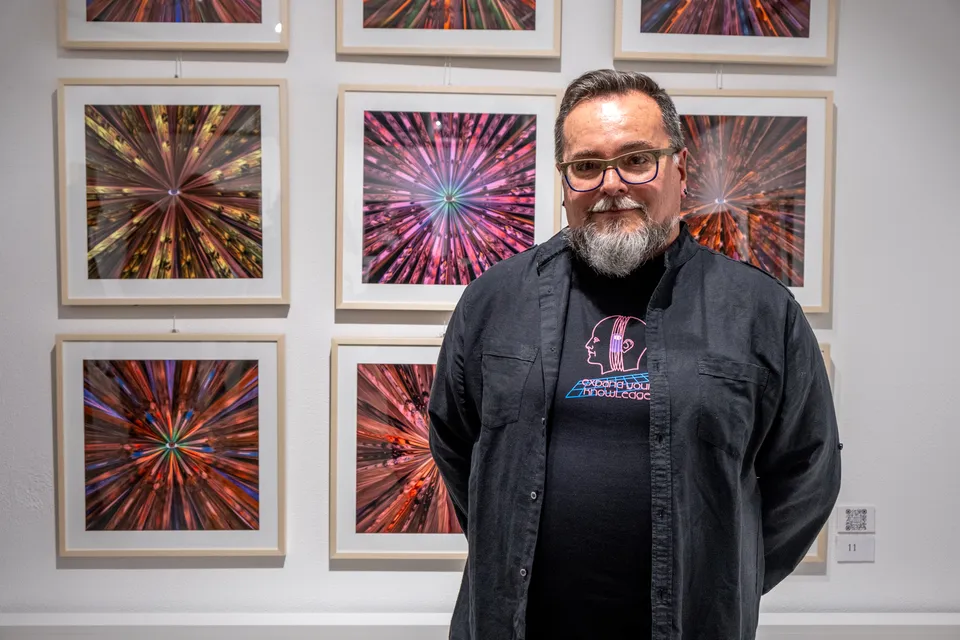
O artista diante de uma parede com impressões quadradas de G.O.D. emolduradas, na Bull & Stein Gallery.
G.O.D. prints at the opening, 25 March 2023

Publications

Study of the work
Conference paper · ACM

Veiga, P. A. (2023). Generative Ominous Dataset: Testing the current public perception of generative art. In Proceedings of the 20th International Conference on Culture and Computer Science: Code and Materiality (pp. 1–10). Association for Computing Machinery. https://doi.org/10.1145/3623462.3623475

On this work
Conference paper

Veiga, P. A., & Sarzi Ribeiro, R. (2024). Videoarte e arte generativa: Performatividade videográfica, tecnodiversidade e IA generativa – Aproximações e repercussões [Paper presentation]. XI Simpósio Internacional de Inovação em Mídias Interativas, Marabá. https://doi.org/10.5281/zenodo.14686980

DOI ↗
On this work
Conference abstract

Veiga, P. A. (2023). The name of G.O.D.: Generative Ominous Dataset [Abstract]. III Encontro Internacional Lusófono Todas As Artes | Todos Os Nomes, Porto.

Related works

Cite this work

APA 7

Veiga, P. A. (2023). G.O.D. | Generative Ominous Dataset [Generative installation]. https://pedroveiga.com/g-o-d-generative-ominous-dataset/