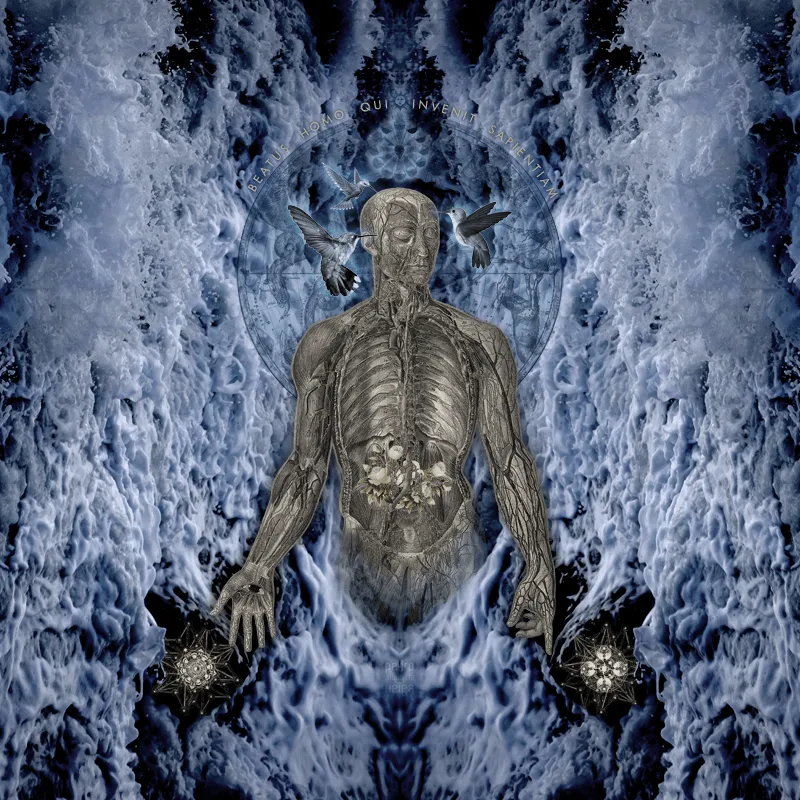
A piece in the Principium series.
Blessed is the man who finds wisdom.
Abençoado o homem que encontra a sabedoria.
The base illustration shows the lymphatic system of the head, trunk, arm, forearm and hand, and comes from the book "Handbuch der Anatomie des Menschen" (Handbook of Human Anatomy), published in Leipzig, Germany, in 1841, by Prof. Dr Carl Ernst Bock (1809–1874).
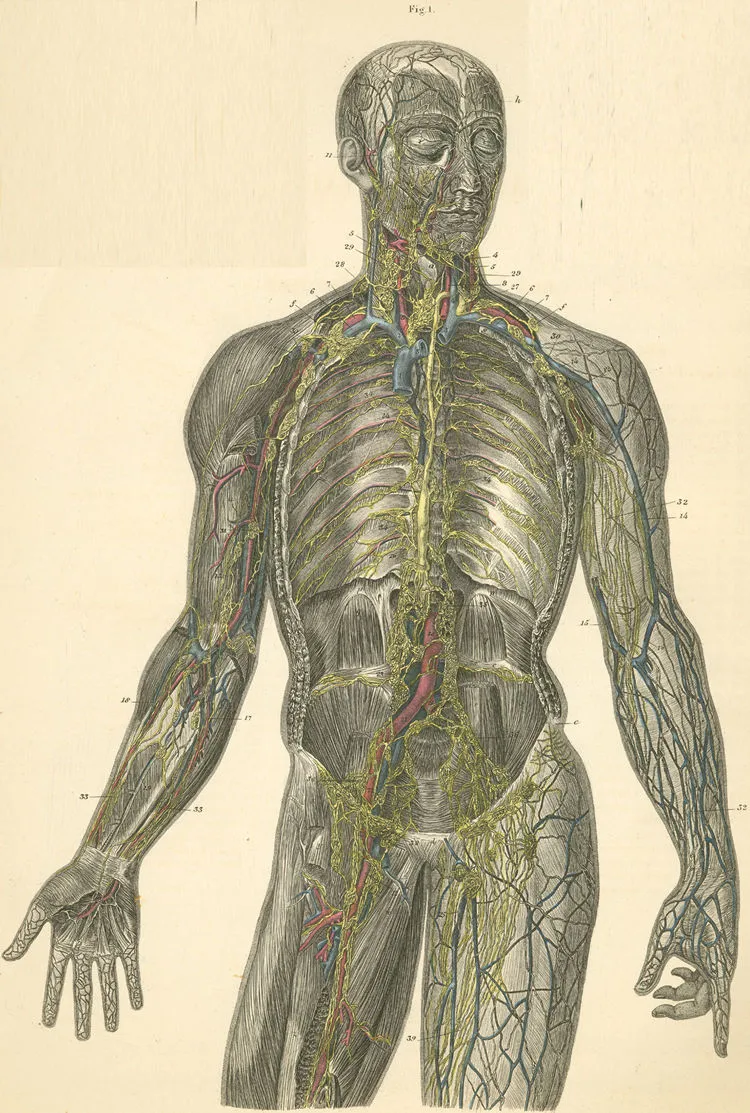
In the original:
a) Larynx.
b) Trachea.
c) Iliac crest.
d) Pubic symphysis.
e) Anterior superior iliac spine.
f) Clavicle.
g) First rib (s. costa I).
h) m. Frontalis.
i) m. Orbicularis palpebrum.
k) m. Masseter.
l) mm. Zygomatici.
m) m. Orbicularis oris.
n) m. Quadratus menti.
o) m. Triangularis menti.
p) m. Diaphragm.
q) m. Quadratus lumborum.
r) m. Psoas major.
s) m. Iliacus internus.
t) m. Deltoideus.
u) m. Biceps brachii.
v) m. Pectineus.
w) m. Adductor longus.
x) m. Sartorius.
y) m. Rectus femoris.
z) m. Vastus medialis.
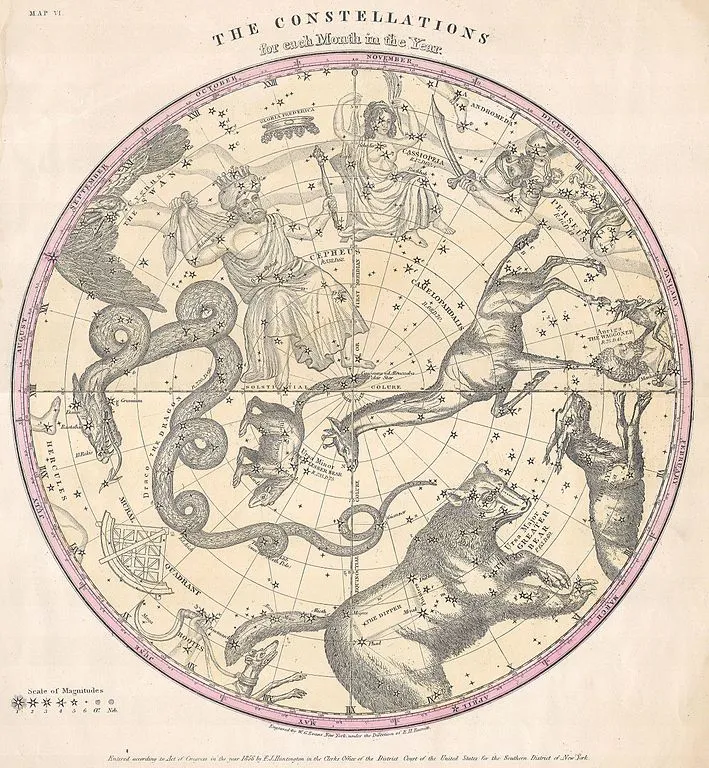
The "aura" is made up of this map of the stars of the northern hemisphere, engraved by W. G. Evans of New York for the 1856 edition of Burritt's Atlas to illustrate the Geography of the Heavens.
The hummingbird illustrations have no attribution or reference date.
Next to the hands is a three-dimensional model of a rhombic hexecontahedron (60 faces that are equilateral parallelograms with two acute angles) bearing "sacred geometry" drawings, in which various symbols are arranged regularly and symmetrically.
One of the hands bears an eye, in the manner of the hamsa (literally "five", referring to the five fingers of the hand), a talisman shaped like the palm of a hand with five fingers extended, used by practitioners of Judaism and Islam as an amulet against the evil eye. It is also known as khamsa, hand of God, hand of Fatima (Muhammad's favourite daughter), eye of Fatima, hand of Miriam (sister of Moses and Aaron) or hand of Hamesh.
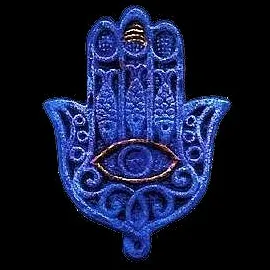
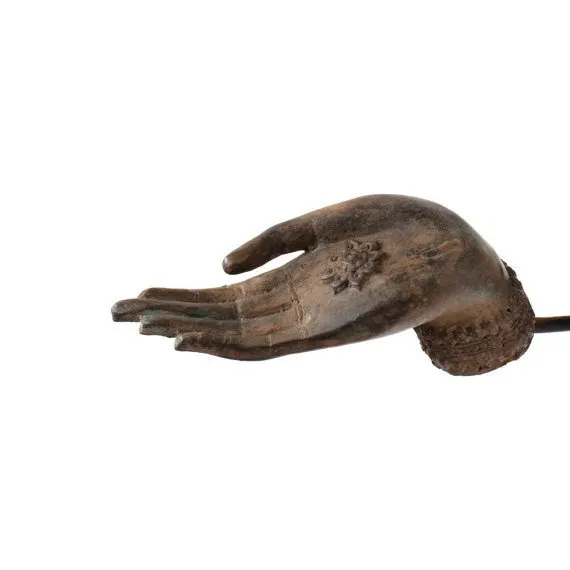
In Buddhism, too, the Varada Mudra expresses the energy of compassion, liberation and the offer of acceptance, which is why the hand is often shown with a mandala or an eye on the palm, to express the powerful energy that flows from an enlightened being through their hands.