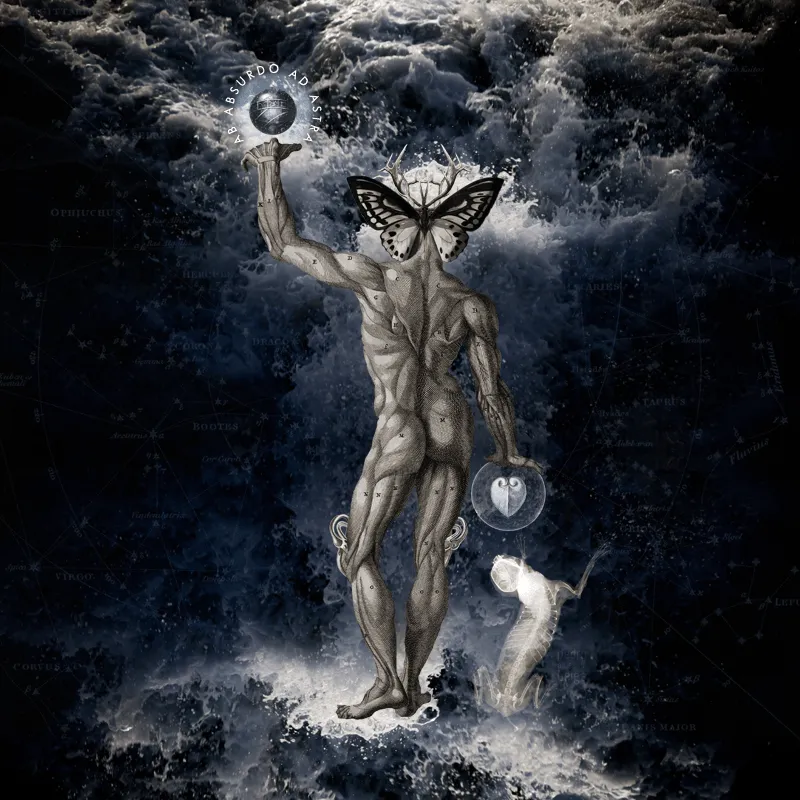
A piece in the Principium series.
From absurd to the stars.
Do absurdo até às estrelas.
A phrase of my own, based on the idea that the most absurd thoughts are often the ones that take us furthest, because they let us break through conscious and unconscious barriers.
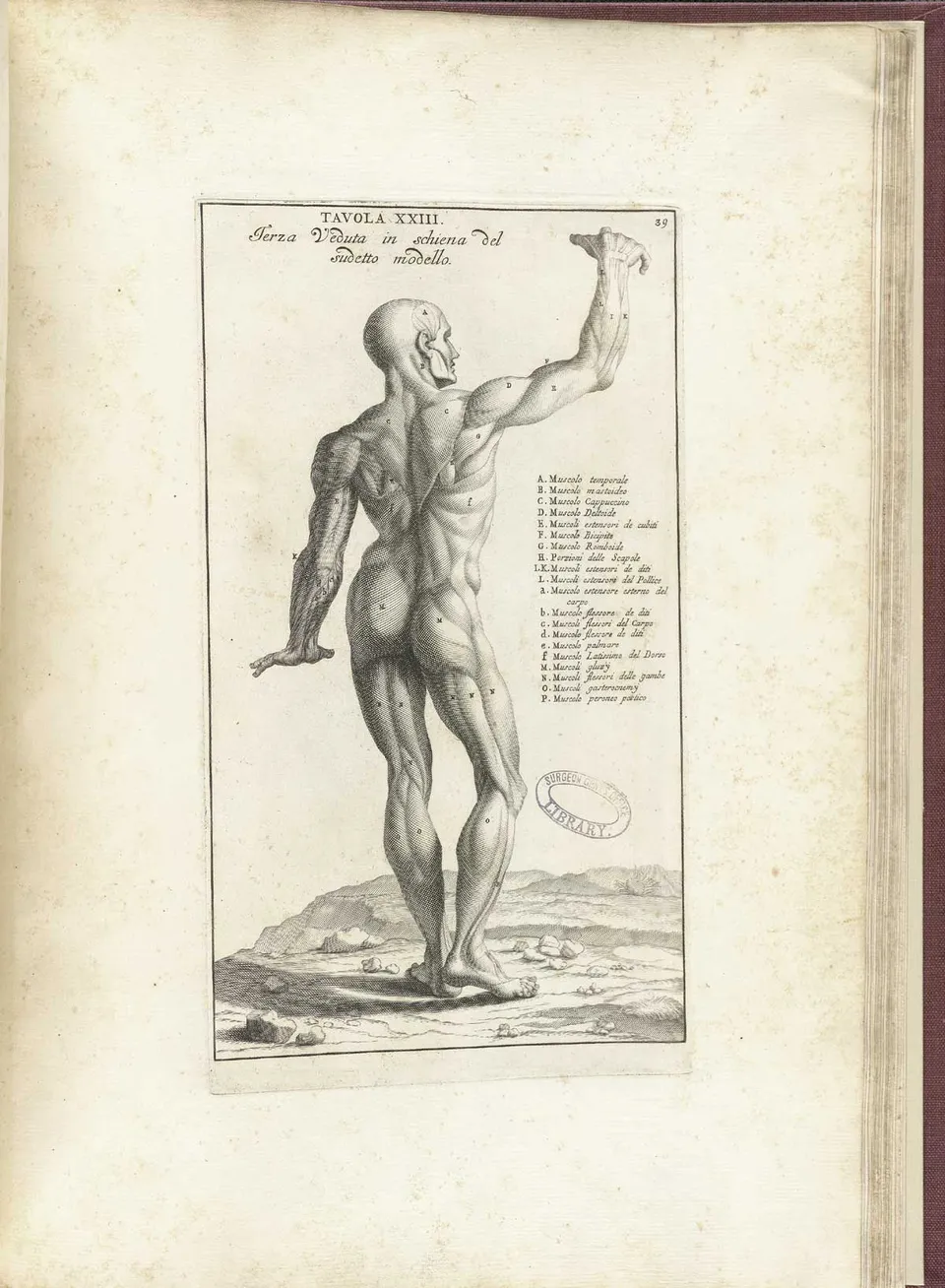
Image by Bernardino Genga in Anatomia per uso et intelligenza del disegno ricercata non solo su gl'ossi, e muscoli del corpo humano (Rome, 1691).
In each hand the figure holds a symbol. In the hand raised above the head we find an engraving of the "Three Lives of Man" by Jakob Böhme (1575–1624), a German Lutheran philosopher and mystic. It represents the connection to the higher, metaphysical sphere of knowledge.
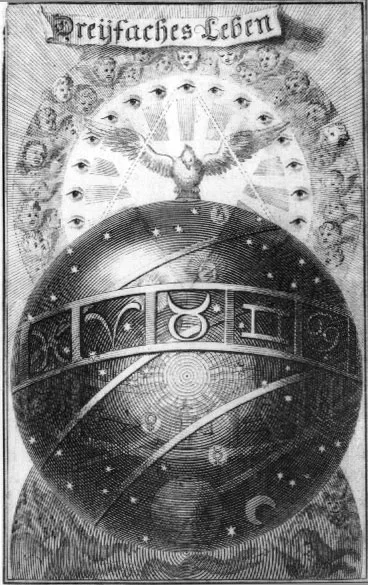
Böhme had mystical experiences throughout his youth, culminating in an epiphany in 1600 that is said to have revealed to him the spiritual structure of the world, as well as the relations between Good and Evil. At the time he chose not to make his experience public and carried on working as a shoemaker in the town of Görlitz, in Silesia, where he raised a family with four children. After another vision in 1610, however, he began writing his first work, Aurora (Die Morgenröte im Aufgang), born of that illumination. The treatise circulated in manuscript until a copy fell into the hands of Gregorius Richter, chief pastor of Görlitz, who deemed it heretical and threatened to exile Böhme if he did not stop spreading his writings. After years of silence, Böhme's friends and patrons persuaded him to keep writing, and new handwritten copies soon began to circulate.
His first printed book, Christosophia (Der Weg zu Christo), was published in 1623 and caused another scandal. Between 1618 and 1624 Böhme produced a huge number of treatises and letters, including his major works: De Signatura Rerum and Mysterium Magnum.
Böhme's complete works were first published only in 1730. Today they are studied and admired by many communities of spiritualists, mystics, theosophists and philosophers around the world.
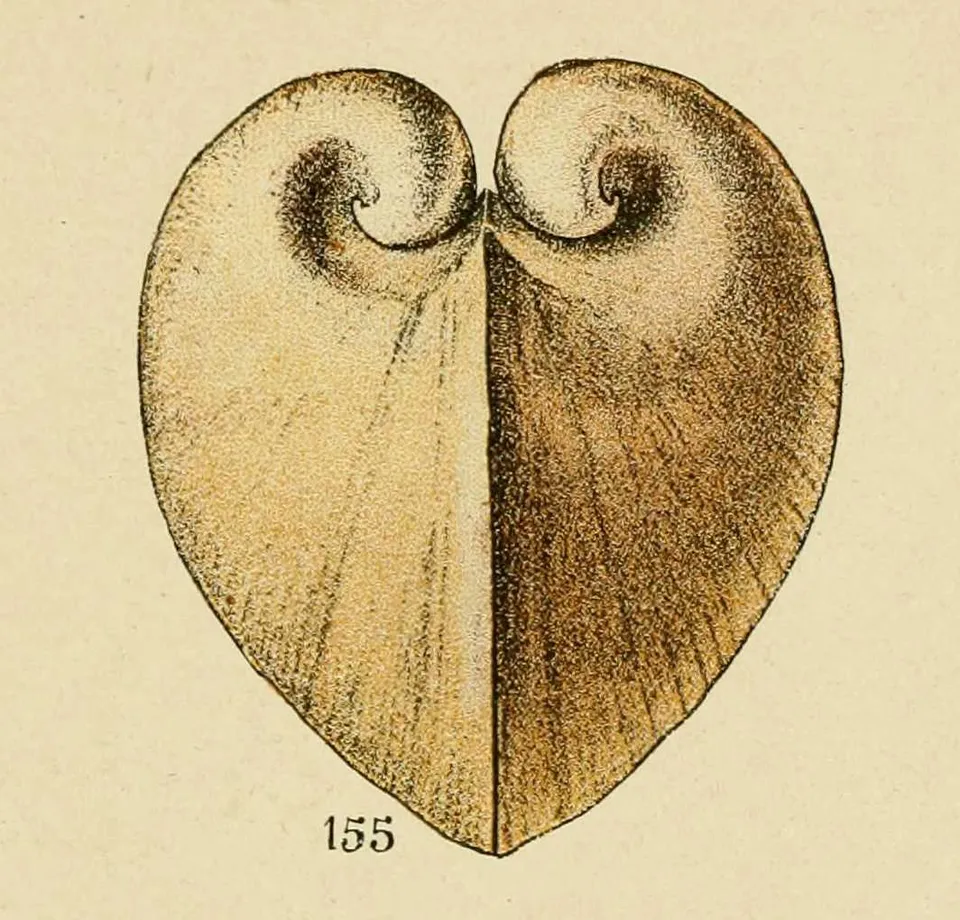
In the lower hand we find an engraving of a bivalve shell – Isocardia cor, Cyprinidae – taken from a natural sciences publication founded in Moselle, France, in 1870, which ran until the beginning of the First World War, in 1914. It represents the connection to the living, biological world.
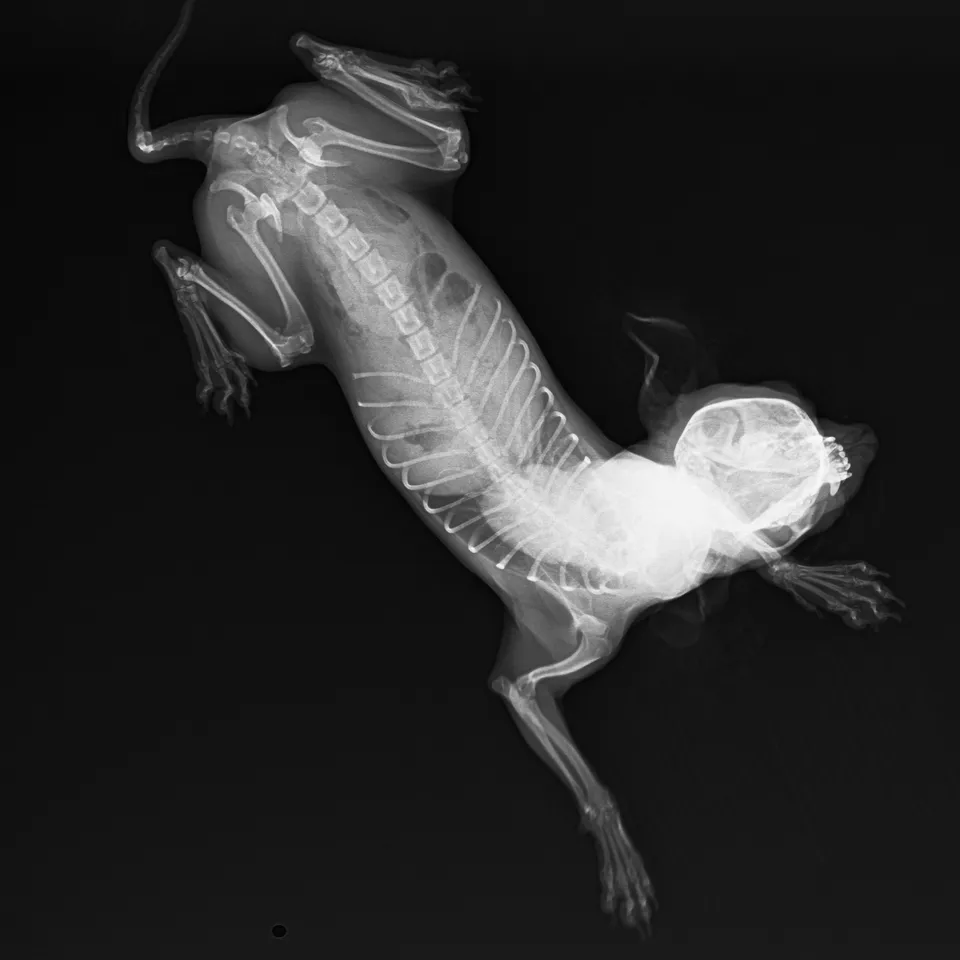
At the figure's feet is an X-ray of a small dog, a symbol of the cycles of life and death: we often associate a skeleton with death, but here we see the skeleton of a living animal. Nothing is what it seems; everything may be absurd.