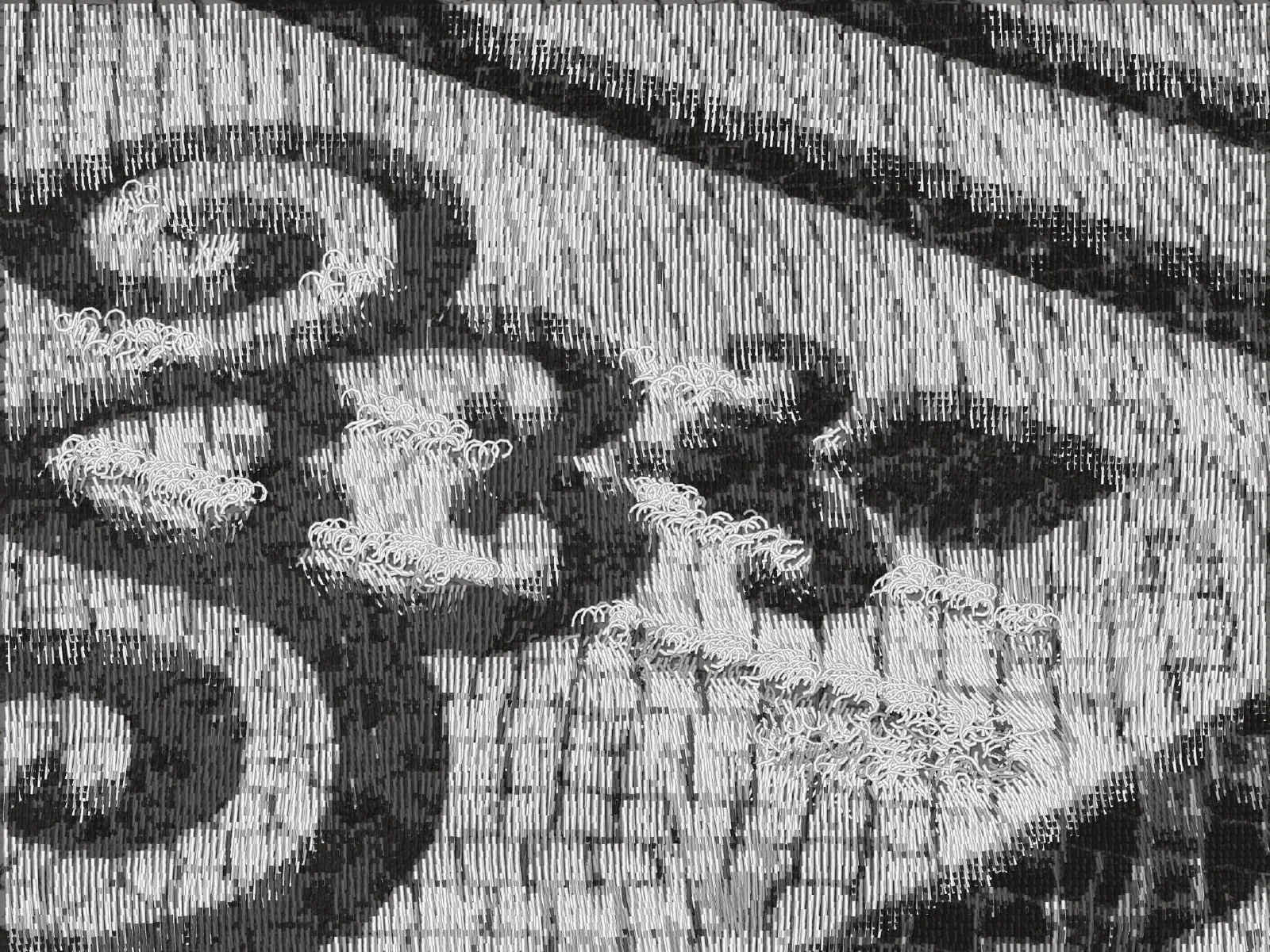
Tear is an interactive work in which photographs of Portuguese pavement become a field of hanging threads. Each photograph is turned into a grid whose cells correspond, roughly, to groups of colours, which may be the size of a stone or even smaller, and each cell becomes a thread, fixed at one end, whose length depends on the tonal group to which it belongs. Through a mouse or a touch screen, the user's hand combs the threads, tangles them or stirs them with the air it displaces. The title is the Portuguese word for loom, but in English the same spelling names both a teardrop and a rip. The play on words exists only in writing, since in English the two words are not even pronounced alike, and it can be read in the work itself: the rip lies in the tears the passing hand opens in the order and stillness of the threads; the teardrop, in a gentler, more melancholy passage.
The work takes the metaphor of the pavement as tapestry literally and shows where it holds and where it gives way. A woven tapestry binds warp and weft; the threads of Tear are fixed at one end only, like the knotted pile of a rug or the fringe at the lower edge of a tapestry. The choice is deliberate: interlacing would hold the image in place, whereas loose threads allow the hand to disturb it, and that disturbance is the condition under which the pavement can be recognised, lost and found again. What is touched is a simulation of thread computed from a photograph of stone.
Combing or tangling the threads reveals hidden aspects of the pavement. The user thus controls the moment at which it is recognised. The step of someone walking along a pavement gives way to the gesture of a hand on a vertical surface: in slow, regular movements, like an unhurried stroll, or in a quick back-and-forth, like someone in a hurry and running late. A hand that moves close to the surface without touching it raises a breeze that stirs the loose ends.
The photographs are by José Bidarra, from the Stones and Strings project, which documents Portuguese pavement in the Algarve: 10 digital photographs taken in Faro, Olhão and Vila Real de Santo António in May and August 2026, and converted to black and white by the photographer.
How it works
The grey values of each photograph are grouped by one-dimensional k-means clustering into two to six tonal groups, ordered from darkest to lightest. By default, dark stones produce long threads and light stones short ones, so that the dark motifs of the pavement, which usually carry its figures, stand out in relief; the relation can be inverted, and the colour of each thread can follow its own cell or the average of its group. Each thread is a chain of seven points, simulated by Verlet integration and subject to gravity, to the friction of the wall and to a slight bending stiffness. Friction gives the tapestry a memory: when it is high, the threads keep for a long time the shape the hand has given them. A slow breeze, derived from Perlin noise, keeps the loose ends in slight motion even when nobody is touching the work. At the default density, a photograph produces between 10,000 and 13,000 threads.
Every 100 milliseconds the work records the position and state of the hand, together with two indicators calculated on the threads: deviation, which rises when they are combed, and curl, which rises when they are tangled. These records make it possible to study what people do when the pavement is offered to them as a surface to touch.
Trying the work
The work runs in the browser. Moving the pointer without pressing raises the breeze, dragging combs and rubbing back and forth tangles; on touch screens, touching works as dragging. Keys: H panel, D photograph only, N and P next and previous photograph, R reset, S save the image, L save the record, F full screen. The panel also lets you try the work with your own photographs, which stay in your browser and are not sent anywhere.
Images
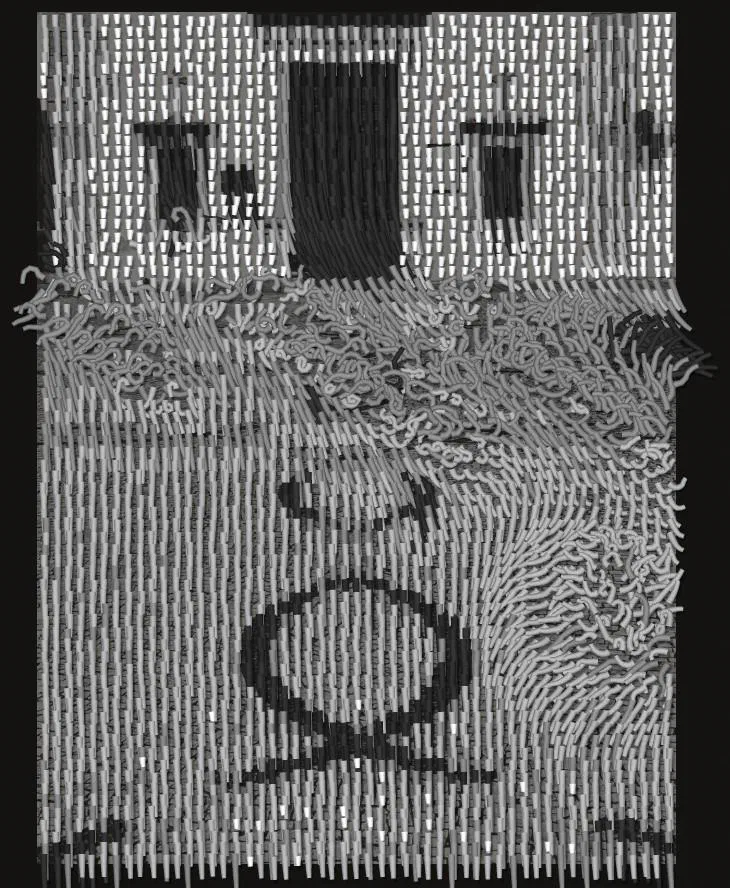
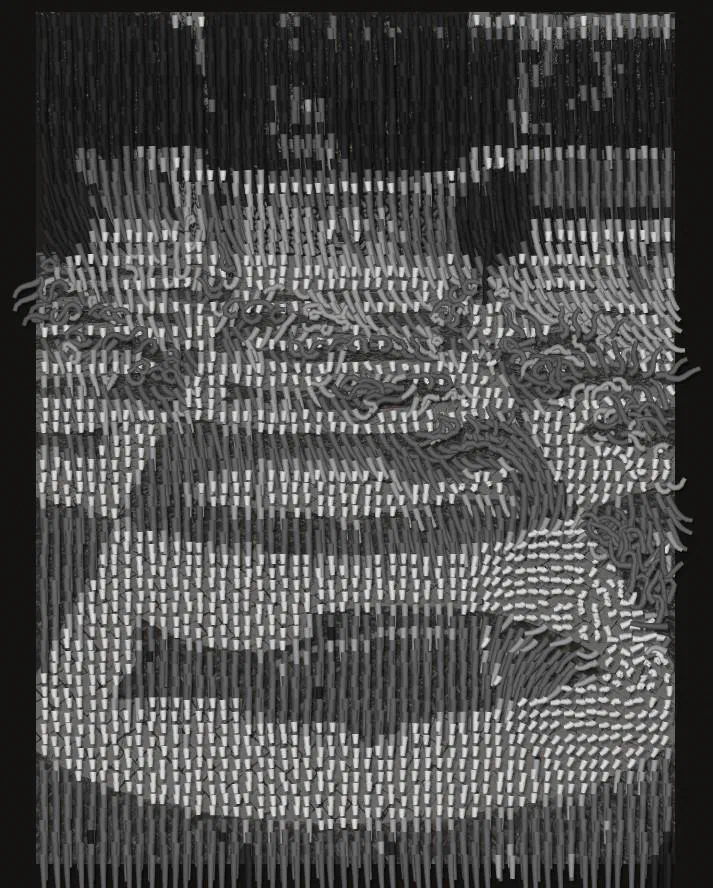
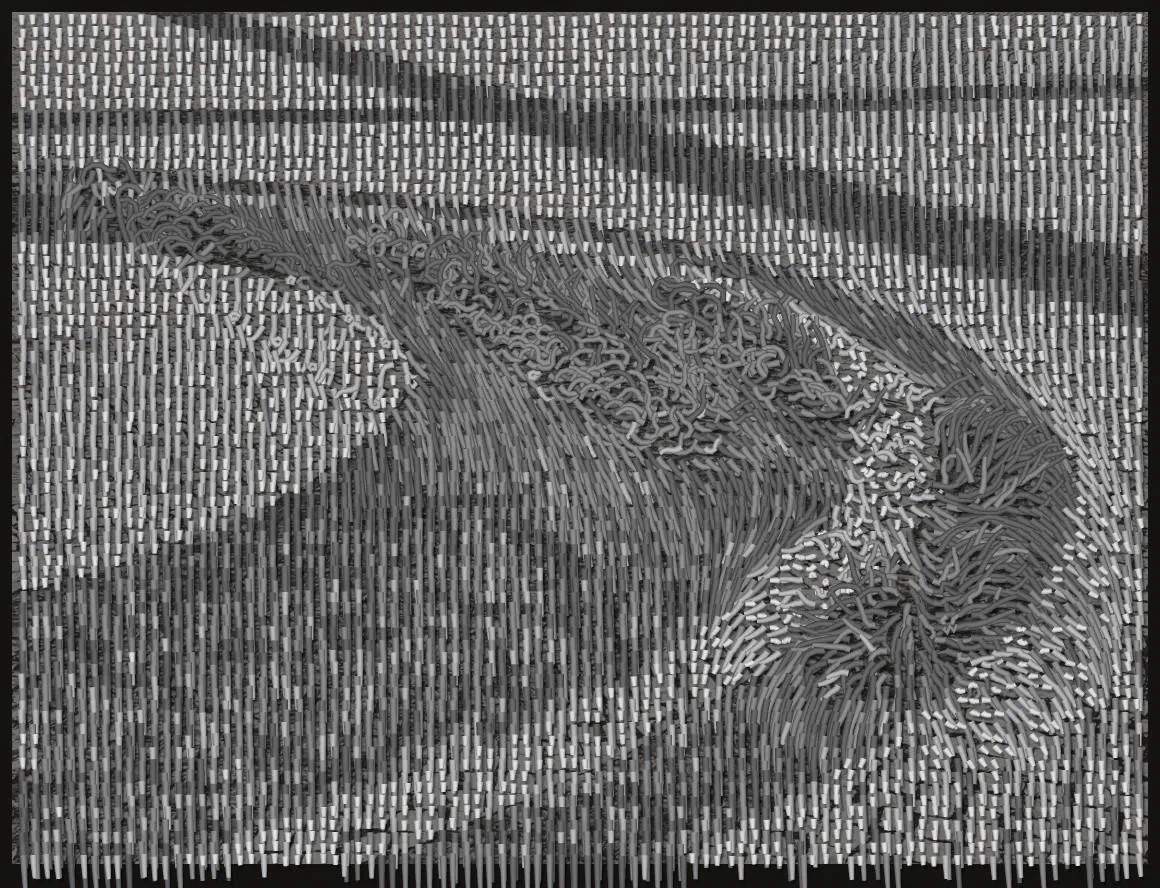
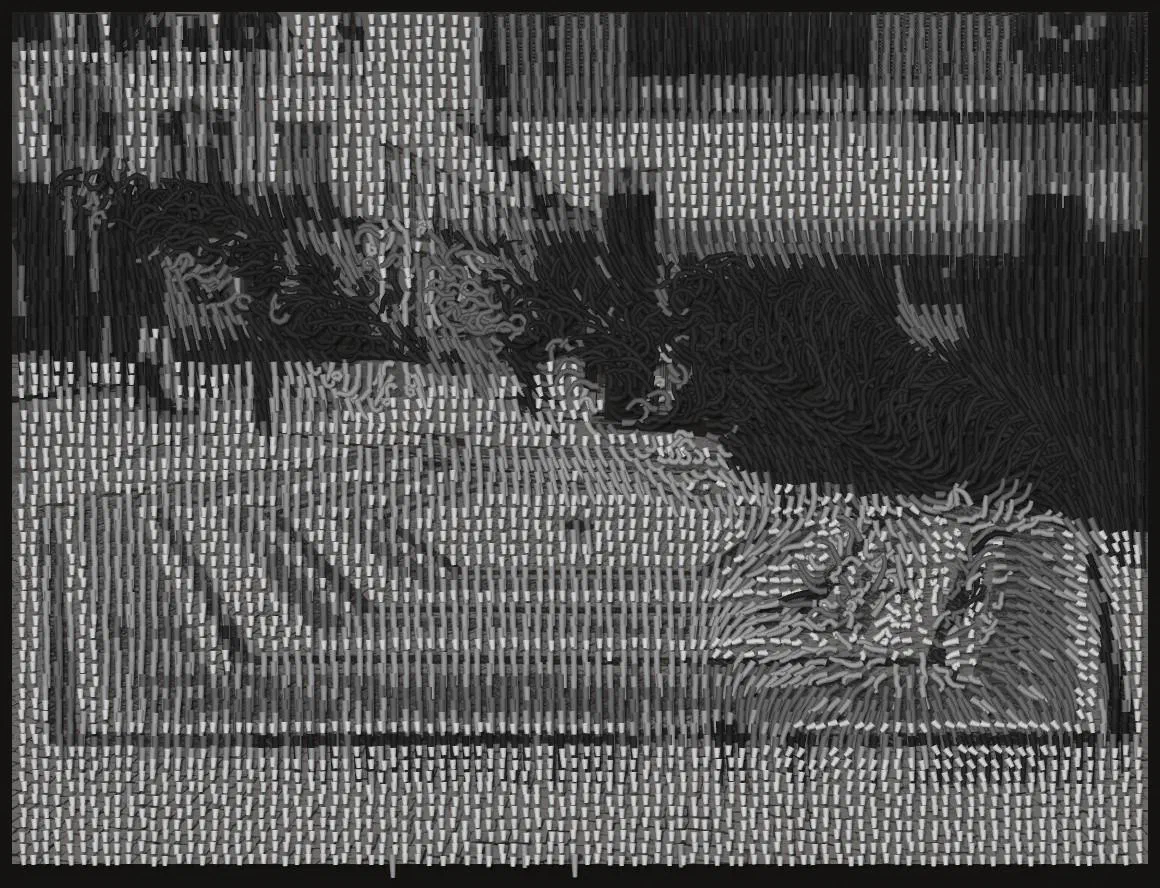
Screenshots of Tear, with four photographs from the collection. Photographs: José Bidarra.
The photographs
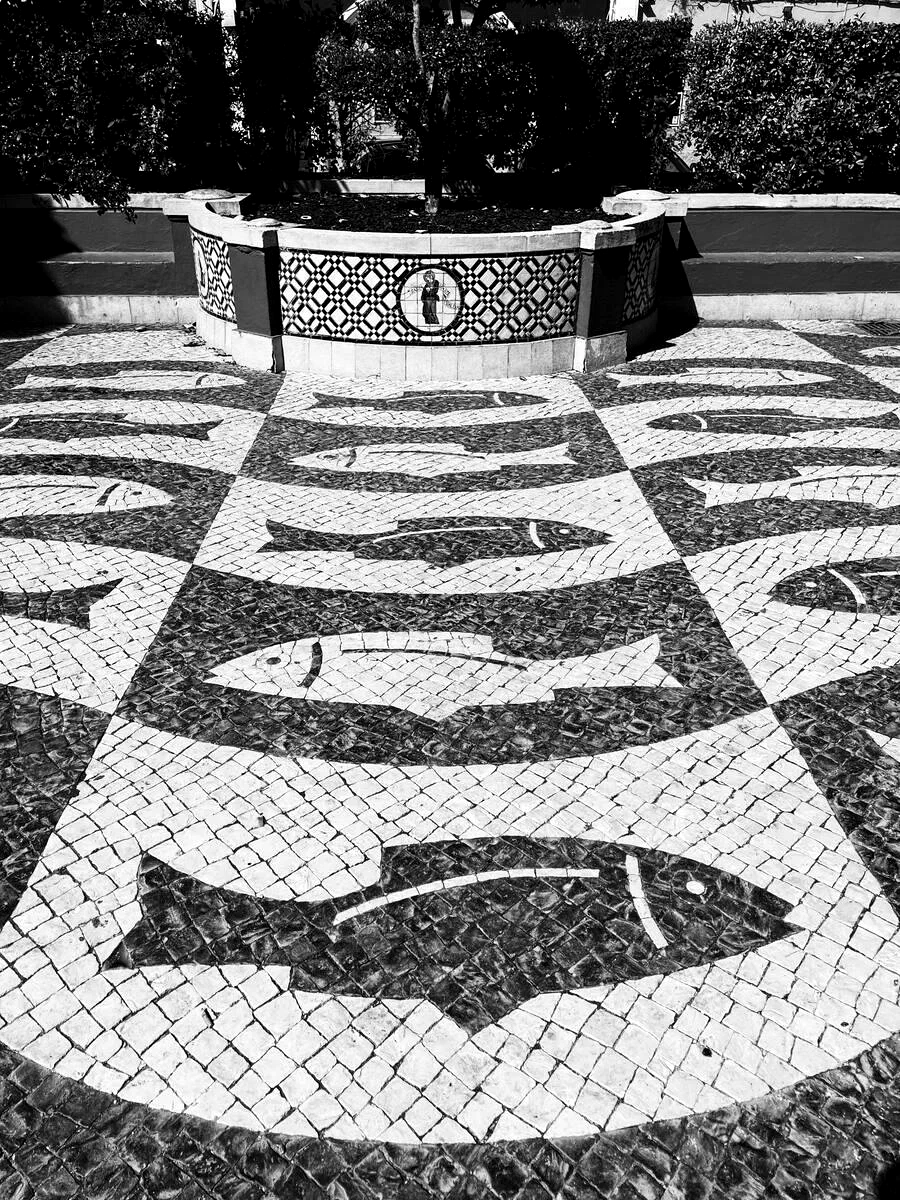
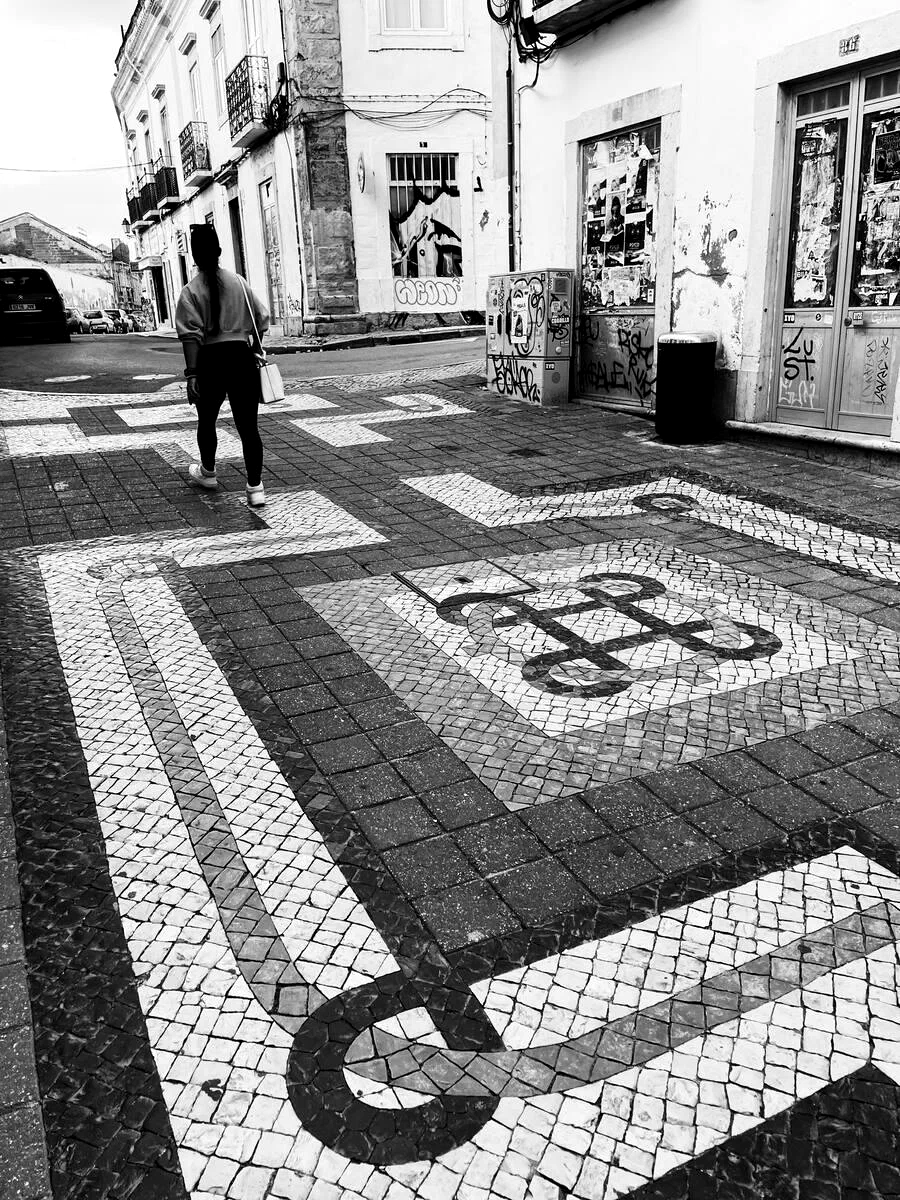
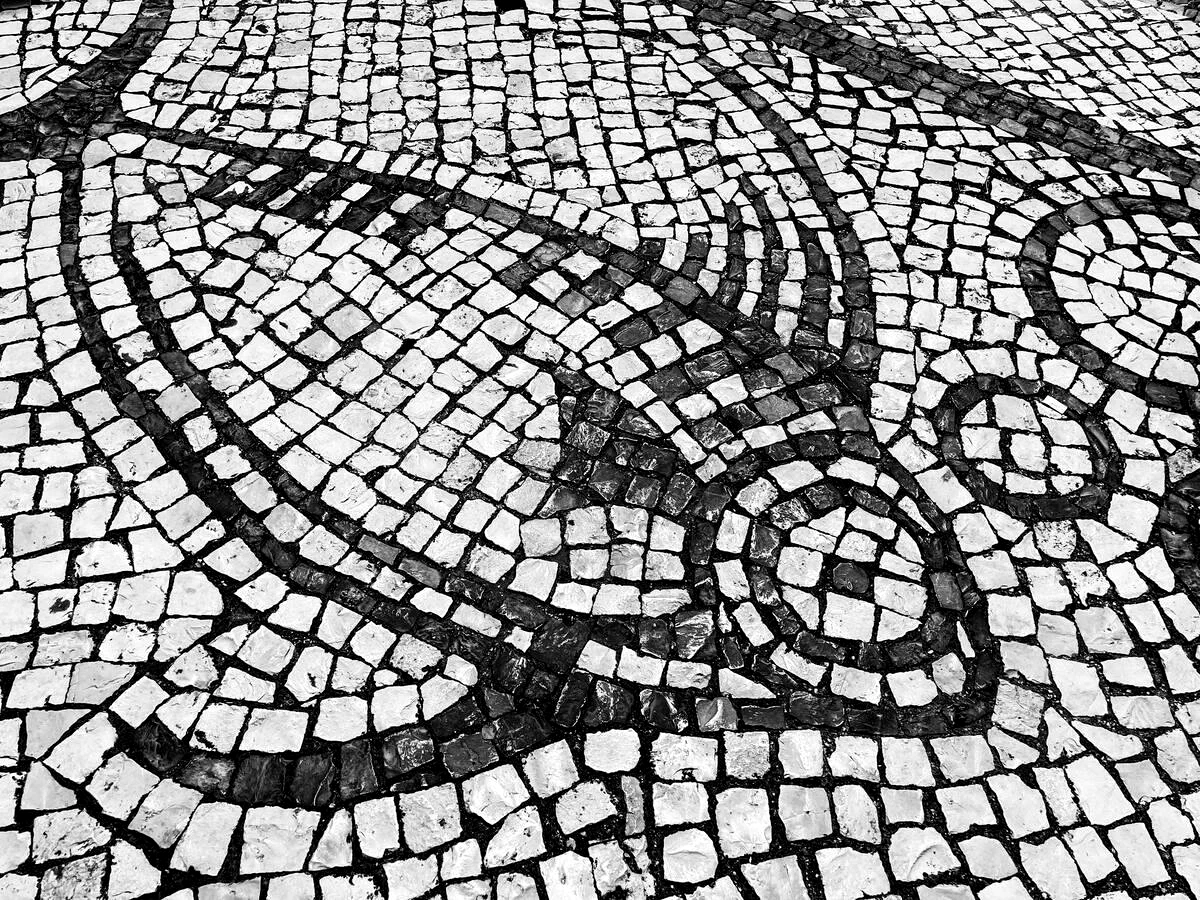
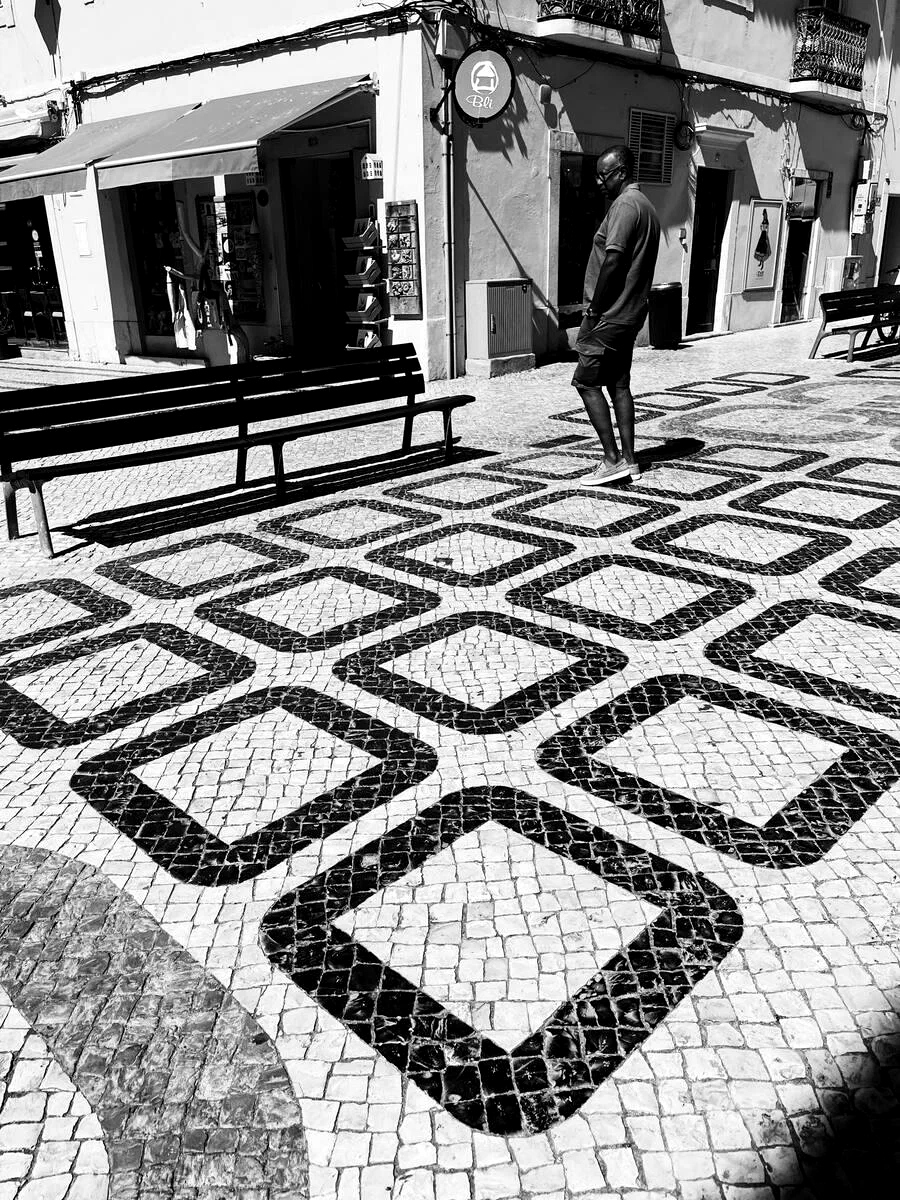
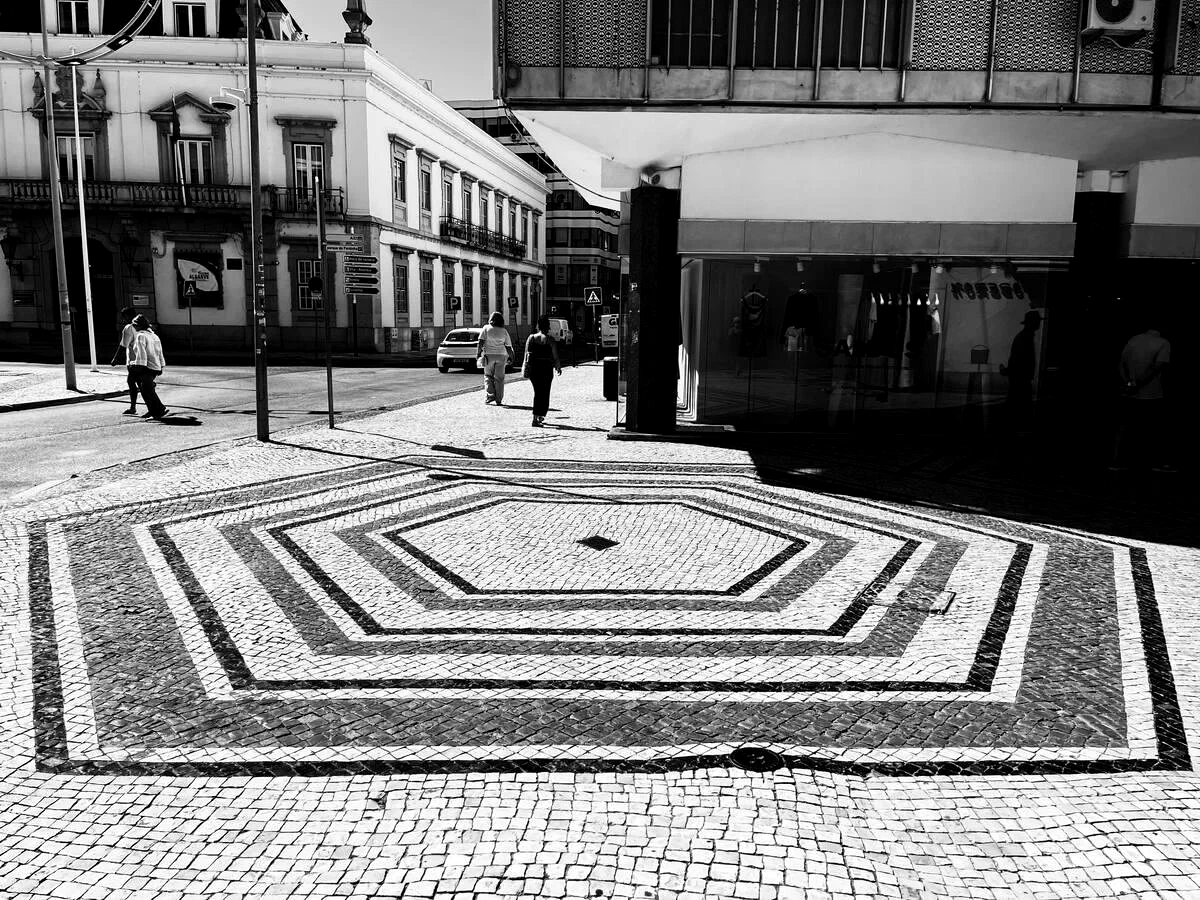
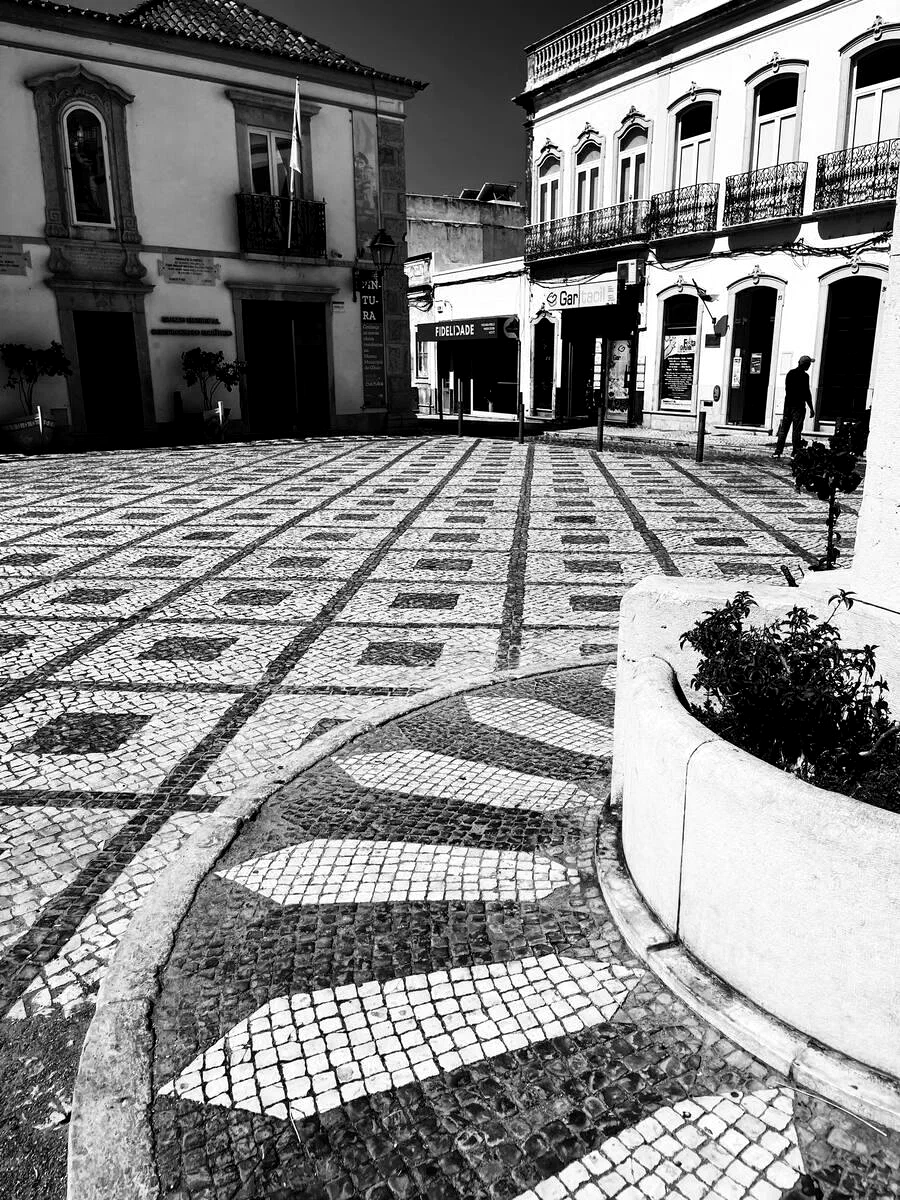
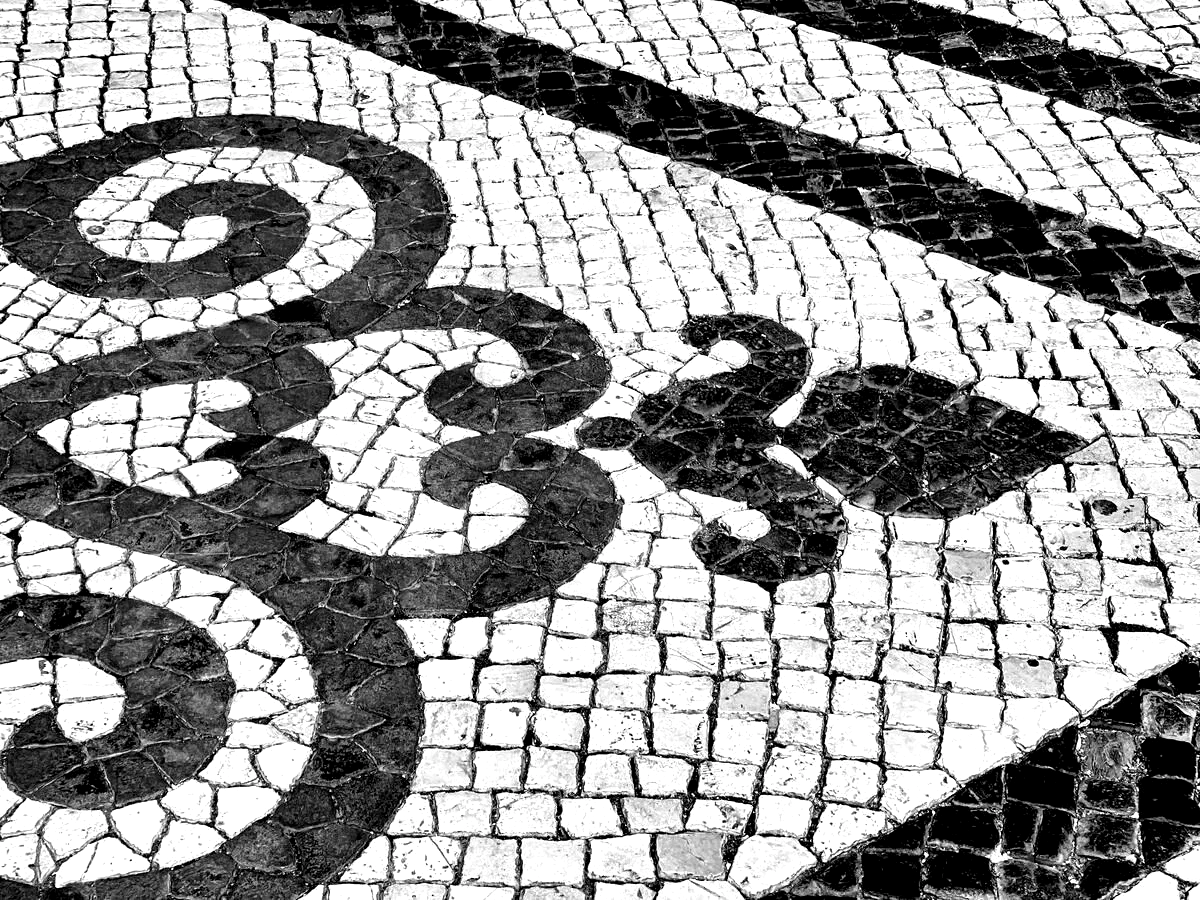
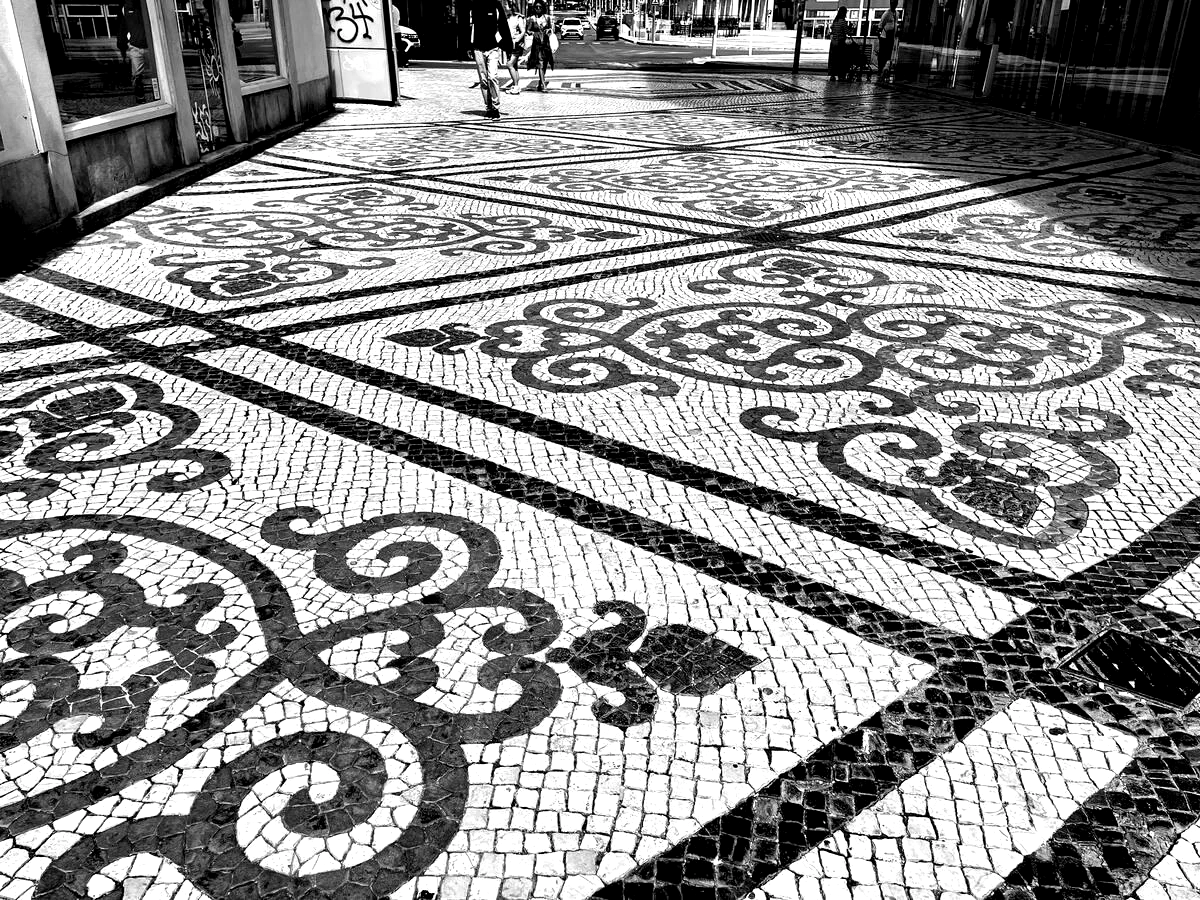
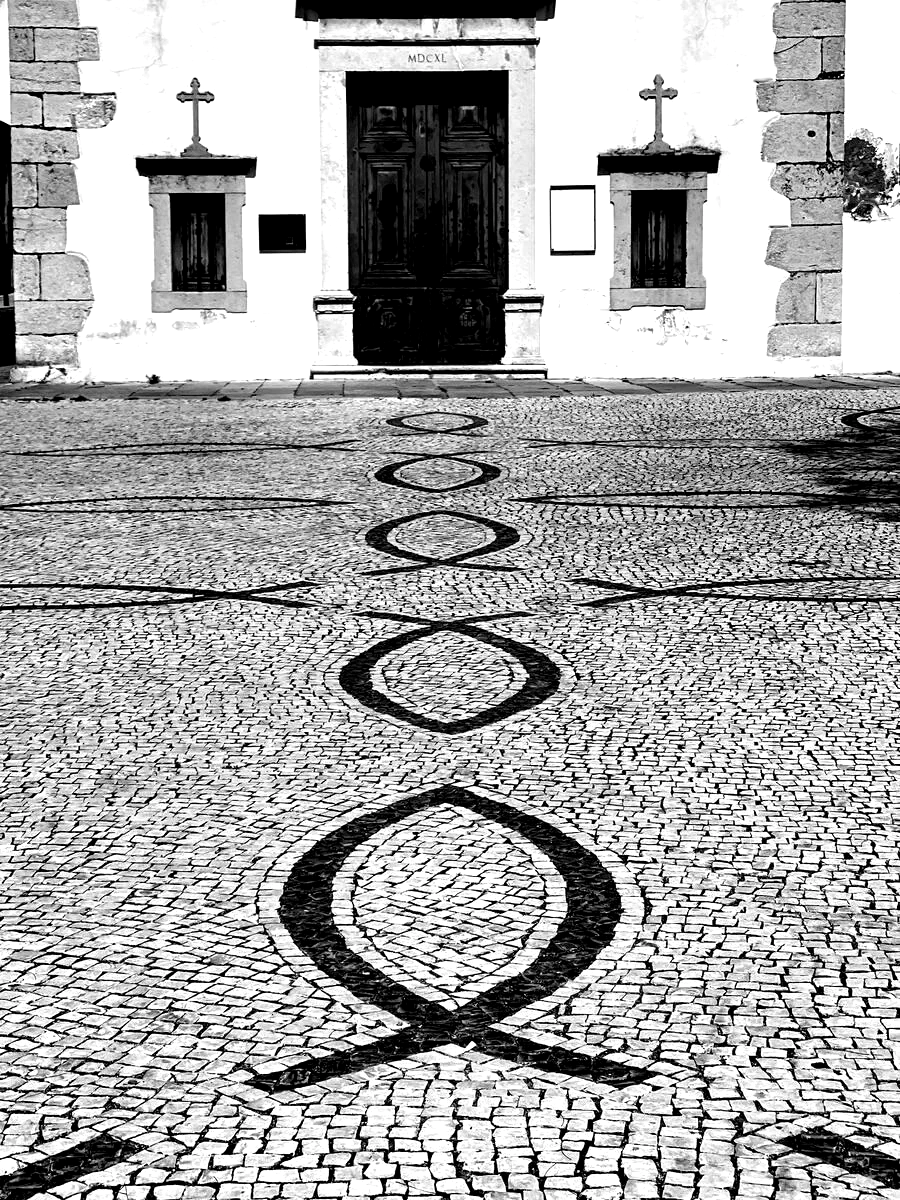
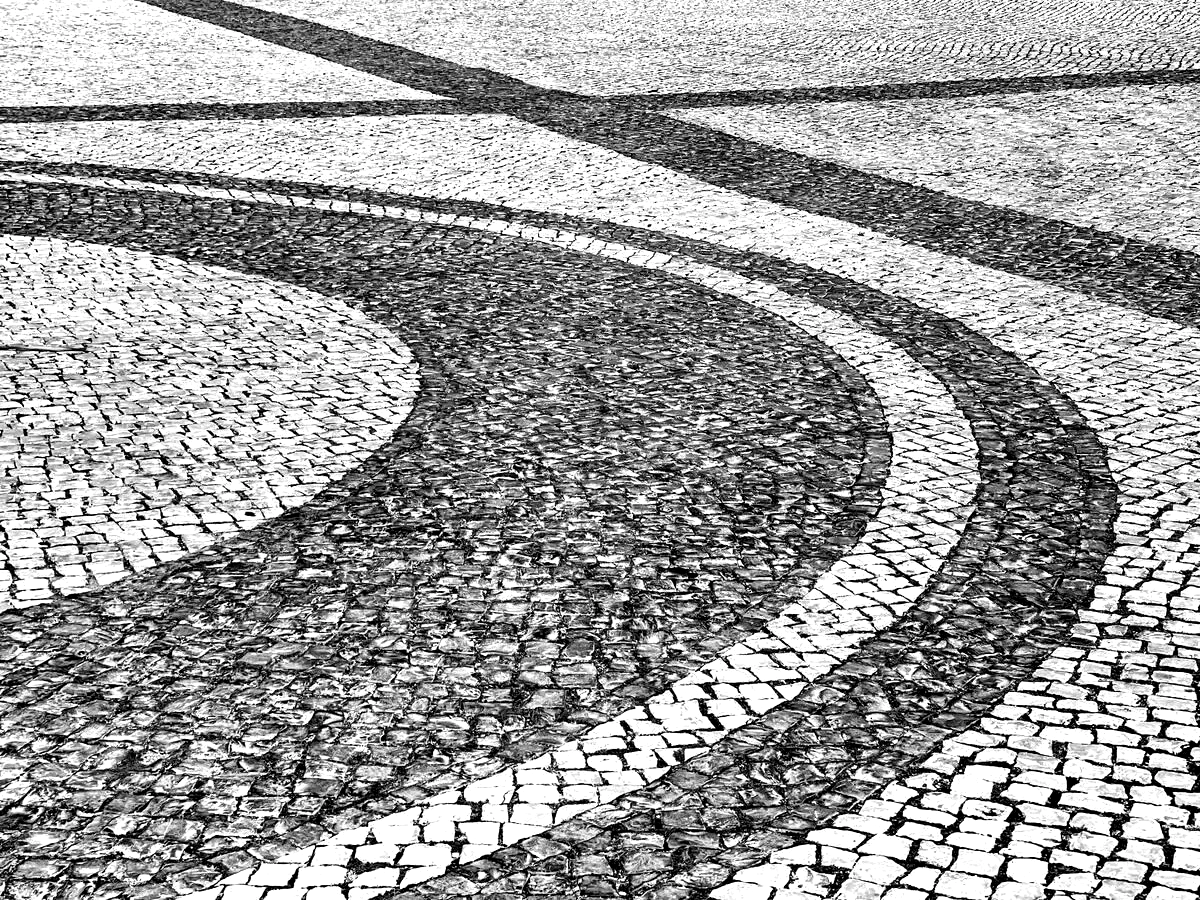
Photographs: José Bidarra. Faro, Olhão and Vila Real de Santo António, 2026.